
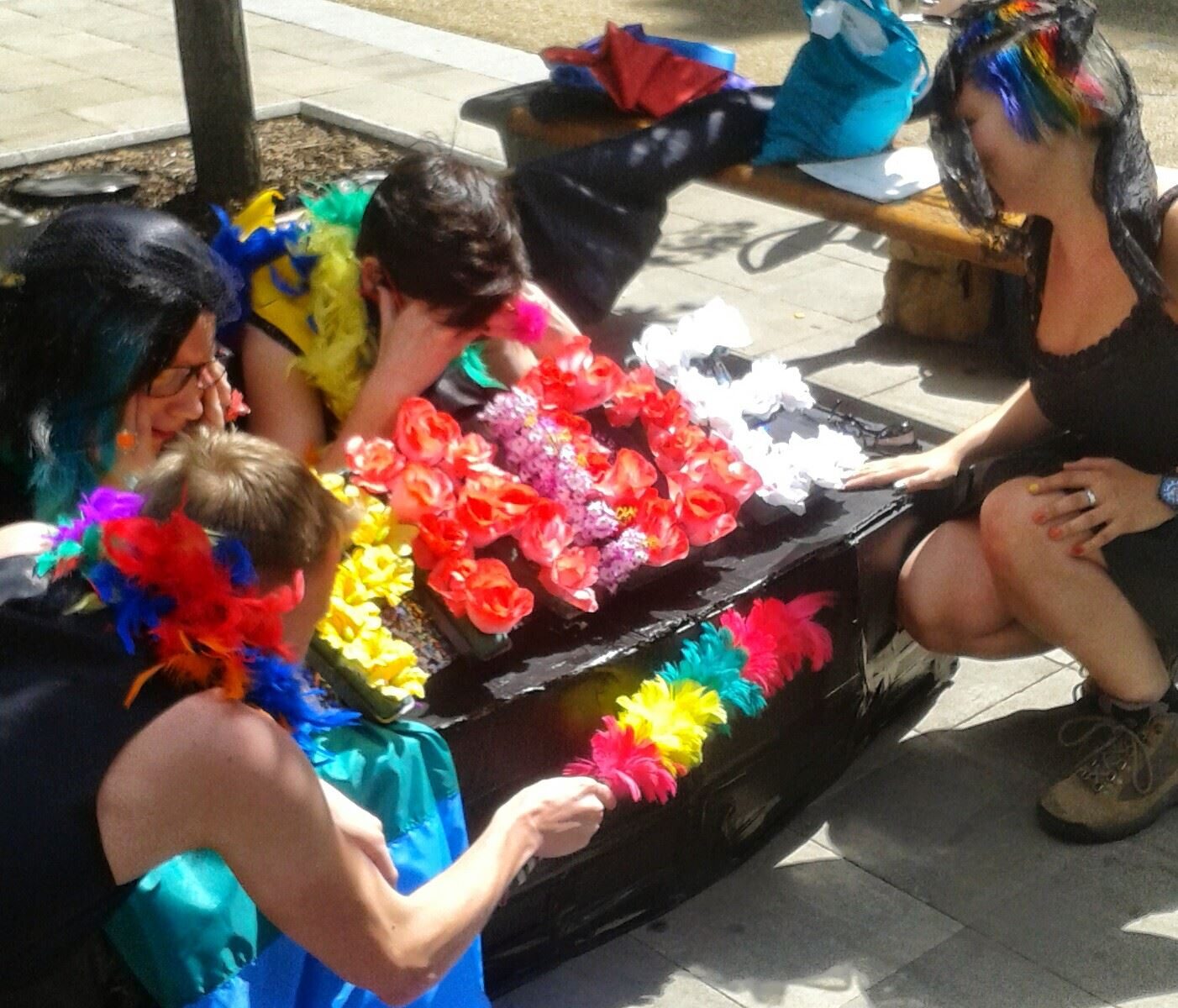
Since my return to the UK, I’ve noticed that more and more people are casually referring to me as ‘queer’. Also, while hunting for social events, I’ve found increasing numbers of LGBT+ groups using ‘queer’ to distinguish themselves from all those reactionary old ‘gays’. To be clear, I know the good people organising these groups are not intending to exclude anyone, but I think I’ve earned the right to ask a few questions. Firstly, do you acknowledge that ‘queer’ is still a common slur outside of your middle-class liberal enclave or social group? I work with multiple working-class and minority communities around the UK and I can confidently report that ‘queer’ is still commonly used as a pejorative. Secondly, are you aware of just how off-putting this word is to some people who are from working class or minority groups within the LGBT+ community? This strikes me as counter-intuitive to your intended desire to achieve more inclusion from groups outside your socio-economic class. Finally, are you aware that most of us in the UK who were made homeless or violently assaulted throughout the 1970’s, 80’s and 90’s were labelled ‘queers’? Oh… You are… Good. So, why do you feel entitled to ‘reclaim’ that term?
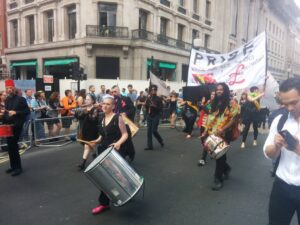
I blame myself. I have always been very proactive in the movement to ‘reclaim’ a radical ‘queer’ politics. For example, in the early 2000’s London Pride had become a bloated corporate mess that took money from insanely anti-human institutions (see images). I worked alongside different people who had become disillusioned with the extent to which LGBT+ life had become an exercise in corporate branding. In my defence, I felt like I was doing the right thing at the time. I’m often asked to explain the term ‘queer’ and I find it difficult. I feel that the multiple applications of this term have become a form of chaos magic intended to disassociate me from my own lived experience. However, I believe I can aggregate current usage of ‘queer’ into three main categories:
1 – “Queer” = “a 21st century reboot of the traditional suburban swinger”
So, you’re wanting to spice up your physical or emotional life by inviting other consenting bodies into your polycule for exploration and experimentation- congratulations! You are now emulating all of those people who got drunk on ‘Blue Nun’ in the late 70’s and voted for Margret Thatcher. No shade intended. Consenting adults can and will do whatever they want. I suppose we have the internet now which makes it all somehow different, but, I don’t know.
2 – “Queer” = “a boutique brand for middle class professionals”
Yeah, if I’d played my cards right, I probably could have turned my sincere objections to the corporate capture of LGBT+ issues into a lucrative grift as a ‘professional’ LGBT+ voice, activist, influencer or media hack. Professional class LGBT+ folk can (and do) make a lot of money grabbing people’s attention by arguing over incendiary cultural topics de jour rather than, oh I don’t know, offering any substantive critique of social or economic inequality.
3 – “Queer” = “an academic rebranding of theories and discourses that have been around for a very long time”
Don’t get me wrong, I’m a closet nerd. I LOVE revelling in theoretical shit, but I’m just unclear as to precisely what researchers hope to achieve by queering everything. I understand the impetus behind the desire to apply this current inter-disciplinary theoretical lens to all fields of inquiry, but is it always generating new knowledge? I’ve referenced Gandy’s work on Queer Ecologies in my own research and agree that it provides a valuable tool for conceiving how various social groups interact with their environment. However, at times it feels to me that the language of queerness is clumsily added to subjects simply to rebrand pre-existing ideas as edgy or innovative.
For example, it’s been years since I read Judith Butler’s ‘Gender Trouble’. As I recall, it contains ideas that harmonise with many of my own academic interests. I like how Butler has expanded JL Austin’s concept of ‘performative utterances‘ (Austin; 1979, pp233-252) to generate a thought experiment that critiques socially constructed stereotypes. At least I think that’s what Butler is doing, often the text is quite contradictory and confusing. I also really like the idea that people are comprised of both a material body and an immaterial aspect that confederate into a unified social being. I detect elements of her theories echo pre-existing discourses such as, among other things, the ‘Corpus Hermeticum’ which describes an ancient Egyptian concept of ‘Ka’.
My a’th Kar (I thee love) is about putting academic theory into community practice. Over the past few years, I have been gradually moving away from LGBT+ work in favour of issues that better align with my principals of social inclusion; namely, addressing economic inequality and social disenfranchisement. As such I’ve been thinking about the outcomes of applying queer theory to projects dedicated to community outreach and engagement. To reiterate, I really don’t care what you call yourself, your friends or your group. Go ahead, start your ‘Queer Rambling’ group – I wish you nothing but the best. However, to be frank, I think that by signalling an adherence to current trends in middle-class academic discourse, you might well be excluding people whose experience of the word ‘queer’ is still very much negative. As LGBT+ people, we need to build robust networks that can effectively withstand any potential regressive backlash – don’t we? That probably includes working alongside people who are unfamiliar with the writing of Teresa de Lauretis or Judith Butler.
References:
Austin, JL. (1979)’Performative Utterances’ in Philosophical Papers 3rd Edition. Urmson, JL and Warnock, GJ (Ed). Clarendon Press.
Gandy, M. (2012). Queer Ecology: Nature, Sexuality, and Heterotopic Alliances. Environment and Planning D: Society and Space, 30(4), 727-747. https://doi.org/10.1068/d10511
Hermetica (1924) translated by Walter Scott. Clarendon Press.