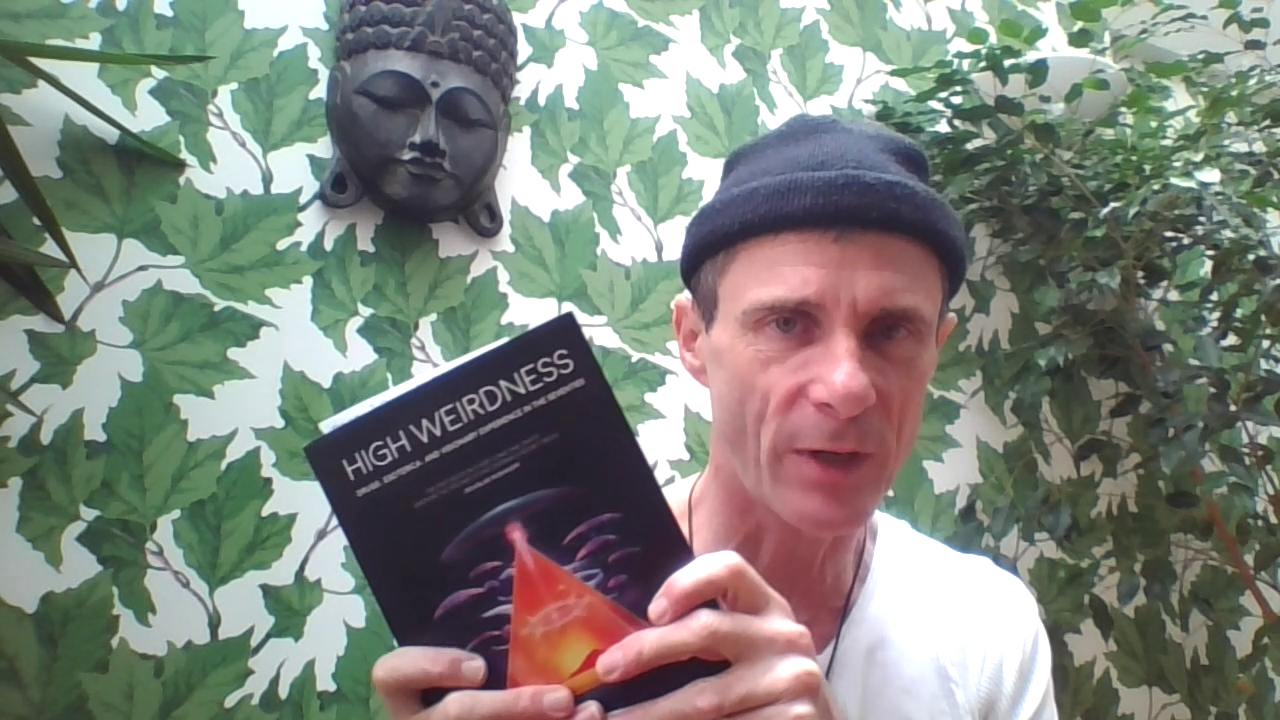
Mesotopia: ‘High Weirdness’ Against a Priestly Class.

I have a lingering suspicion that every movement, no matter how exploratory or liberatory it begins, eventually generates its own clergy. The people who explain its meaning to the rest of us. Not the be-robed, incense-and-lace variety (though give it time), but the interpretive class – the ones who assure you that what you think you’re seeing isn’t quite what you’re seeing, and luckily, they have the key. This caste hasn’t vanished; it has simply donned the corporate drag of the professional-managerial class.

Mesotopia, at least as I understand it, refuses that comfort.
If mesotopia is anything, it is the awkward recognition that the world is real – stubbornly real – but never fully available. Objects exceed us. Systems exceed us. Institutions exceed us. Yet each of us possesses the capacity to make meaning through our encounters with the environments we inhabit. And this is the crucial point: that process does not require a priestly caste to mediate it. Partial revelation is not the same thing as authorised revelation.

We live in an age addicted to interpretation. Scroll any feed and you’ll find someone explaining what the data really means, what the conflict really signifies, what the text actually implies. It’s a lucrative posture. It flatters the explainer and infantilises the audience. The message is always the same: the real is too complex for you. Leave it to us.

Mesotopia pushes back.

If meaning happens in the encounter – if it is co-constituted in that charged space between me and what I meet – then no one gets to claim exclusive access to it. The mesotopian event is democratic in the most unsettling way. It insists that you are already implicated in the making of sense. There is no backstage pass.

This is not relativism. The world bites. History happened. Power concentrates. Money moves in very specific directions. But the claim that only a sanctioned cadre can interpret these realities is itself a power move. It is theology dressed up as theory.

You see it everywhere. In academia, it appears as jargon that sometimes functions less as precision and more as initiation rite. In activism, where sometimes a deviation from approved vocabulary can feel like heresy. In politics, where technocrats speak as though code and program were sacred texts decipherable only by the ordained.

Mesotopia requires a certain slowness – a willingness to dwell in encounter. Each experience is turned through association and intuition as we try to understand the environment in which we find ourselves. Yes, the real withdraws. Yes, structures operate beyond immediate perception. But that does not invalidate lived encounter; it intensifies its importance. The fact that we never grasp the whole does not mean we grasp nothing. It means we work provisionally, relationally, in good faith.

A priestly class thrives on the promise of total vision. Mesotopia is content with fragments.

There is something profoundly anti-authoritarian about admitting that revelation is always partial. It levels the field. It allows disagreement without excommunication. It acknowledges that I might hear something you don’t, and you might notice something I’ve missed – not because one of us is enlightened, but because we are differently positioned within the same recalcitrant world.

The danger, of course, is that mesotopia itself becomes doctrine. That someone eventually writes the catechism: “Thou shalt interpret thus.” I can already hear the conference panels.

So let me be clear. This is not a retreat into the political monad, nor a New Age hymn to the sovereign self. We are not isolated atoms floating above our biological or socio-political milieu. Our environments include community, history, institutions and power. Meaning-making happens within those entanglements, not outside them. Nor do I believe in some private enlightenment waiting at the end of sufficient introspection.

Mesotopia is not a ladder to ascend above others. It is a reminder that we are already entangled in something that exceeds us – and that none of us owns the veil.

No robes. No incense. No vestments. No authorised intermediaries.

Just the difficult, ordinary work of meeting a world that will never fully disclose itself – and refusing to let anyone claim exclusive rights to its mystery.

As always, my a’th kar!

I discuss this post in more detail on my YouTube channel:

References:

Davis, Erik. (2019). High Weirdness: Drugs, Esoterica, and Visionary Experience in the Seventies. MIT Press.

Verran, Tristan. (2025) Mesotopia: Towards a Place of Lyrical Inquiry. University of Plymouth Archive.
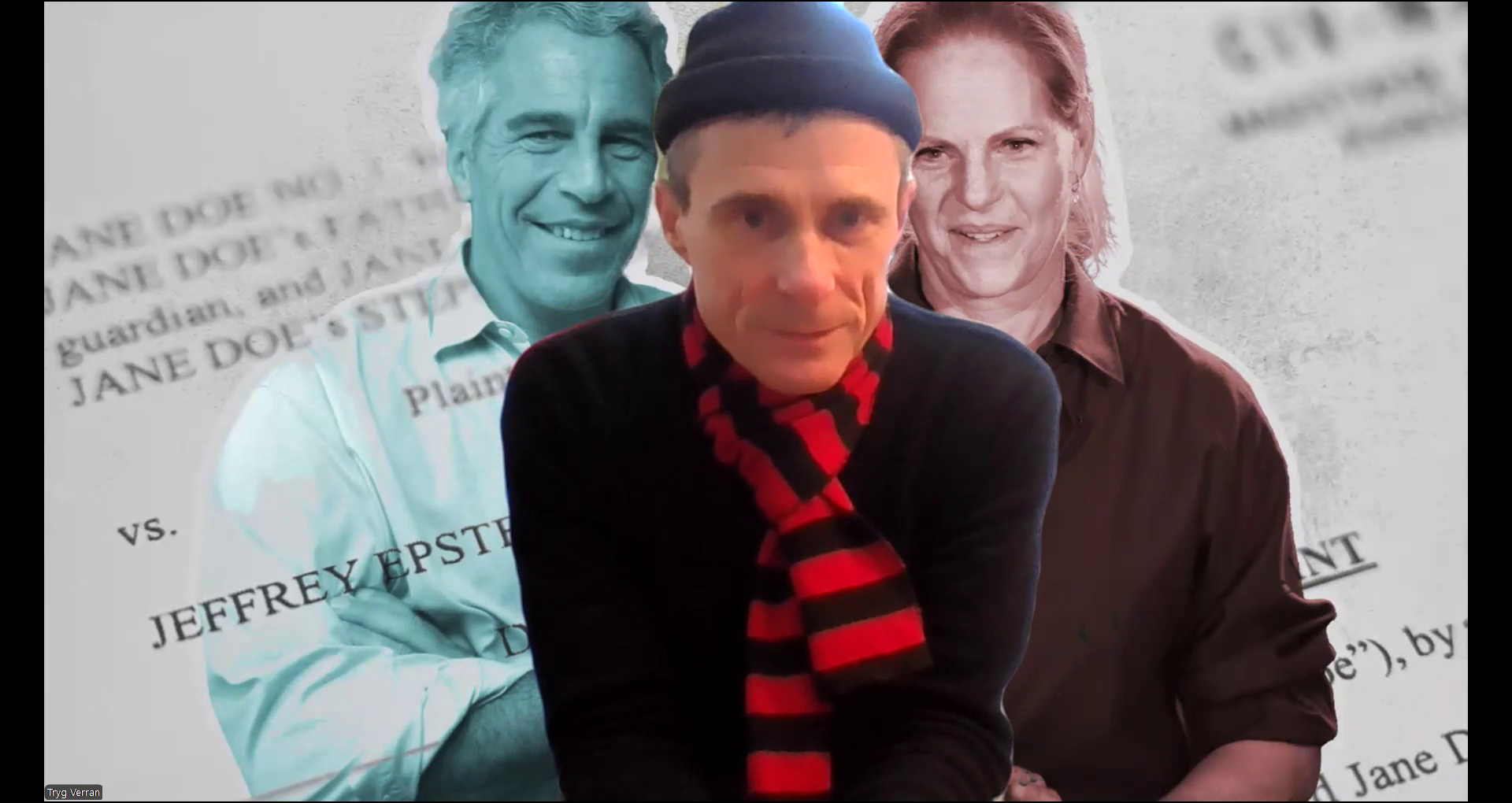
Why the Epstein Scandal Matters to Grass-roots Organising – Yes, Even in Cornwall!

I know. The moment you mention Epstein, half the room switches off and the other half assumes you’re about to spiral into salacious gossip about decadent royals. Fair enough. There’s been no shortage of lurid headlines, often supporting bad faith takes or outright distractions. If you’re involved in grassroots organising – environment, housing, disability rights, local culture – then the Epstein scandal actually matters a great deal. Even here in the Duchy of Cornwall. Especially down here, in fact.

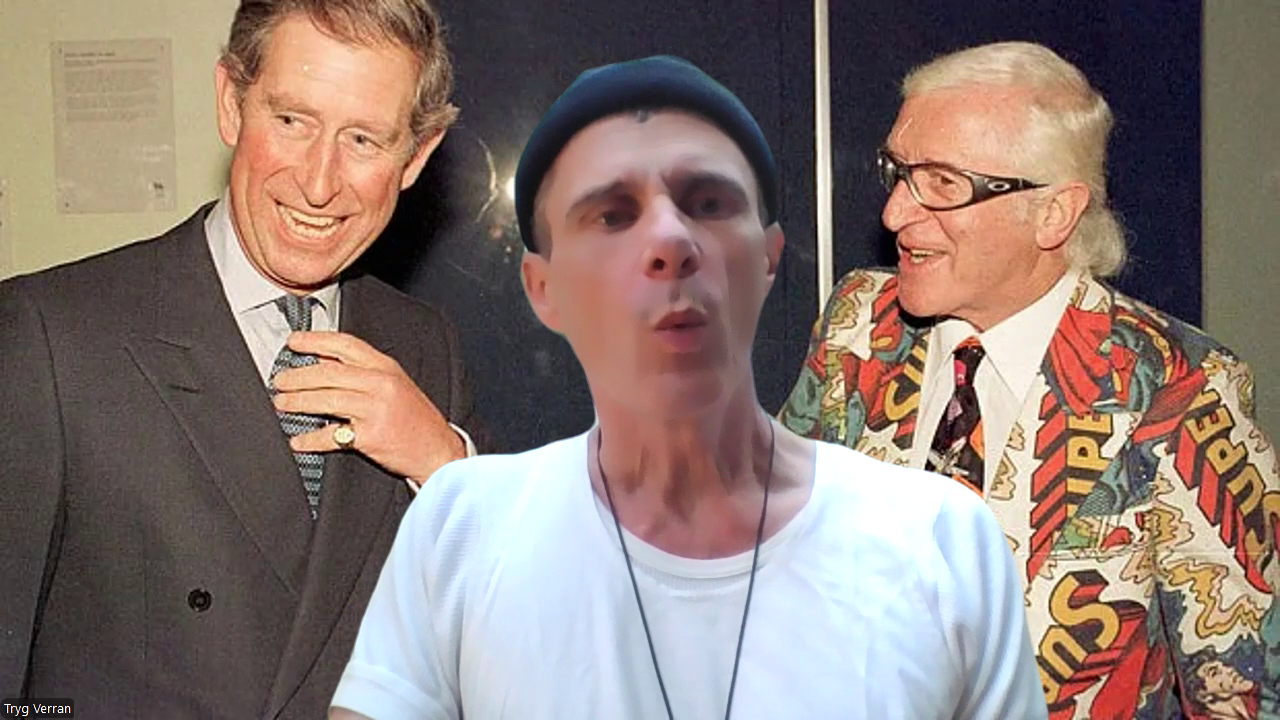
Thanks to Tamedia for the background image.

Not because of the sex crimes themselves, horrific as they are. Without sounding flippant, those are not the important part from an organising perspective. What matters is that the Epstein documents give us a rare, unvarnished look at how power actually functions. Not how it claims to function in glossy brochures, mission statements, or charity galas, but how it works when the doors are closed and the theatre stops.

What emerges is a class of people who genuinely believe themselves to be above the law – not metaphorically, literally. They trade influence across governments, intelligence agencies, banks, weapons manufacturers, and ‘philanthropic’ institutions with astonishing ease. The Epstein network shows us that inter-institutional power doesn’t operate through democratic accountability; it operates through personal relationships, financial leverage, kompromat, and shared class interest.

This is vital for grassroots organisers to understand, because so much organising energy is wasted arguing with the performance of power. We petition the institution, we appeal to its stated values, we take part in consultations that are largely ceremonial. Such processes help cultivate the illusion of participation. Meanwhile, the real decisions are being made elsewhere, by people who will never attend a town hall meeting and who don’t particularly care what the public thinks.

One of the more sobering elements of the Epstein story isn’t just who he knew, but what moved through his world: money laundering, arms flows, political interference, even regime change. Governments toppled, leaders removed, and vast sums legally washed clean through cultural, educational, and environmental organisations. That should ring bells for anyone who’s ever wondered why certain funders always seem to back ‘good causes’ while working-class communities remain neglected.

People are still combing through millions of released emails in the US, but already the outline of empire is visible. The Financial Times article on Epstein’s banking connections is revealing in this regard. When you trace those networks outward, you don’t end up in abstract theory – you end up in very real places. Yes, even Cornwall. Through extractive industries like Imerys, and through respected institutions such as wildlife and cultural trusts. This is what global power looks like when it lands locally.

The same family that profits from extracting Cornwall’s mineral reserves also funds organisations that promote ‘greener’ approaches to resource management, including initiatives linked to the Cornwall Wildlife Trust’s Green Recovery Challenge Fund. This does not, in itself, prove any wrongdoing. However, it does help explain why certain environmental impacts, particularly those linked to mineral extraction, are often absent from official campaigning narratives. This is grassroots theatre in action: the same interests profiting from extraction are also funding the boundaries within which ‘opposition’ is allowed to operate.

To be clear, the Epstein revelations are often discussed through the lens of particular social or cultural networks, but focusing on identity alone misses the point. What is being exposed is not a uniquely Zionist phenomenon, but a familiar pattern of elite, transnational power that has historically operated across Mittel-European, British, German, Italian, and American ruling classes alike. This is simply how imperial power has reproduced itself.

Crucially, the people working at the grassroots level of charitable, cultural, or environmental organisations are not villains. Most have little to no awareness of the legacies of wealth tied to colonial extraction in regions such as Rhodesia, Palestine or Somalia for example. My research suggests these same mechanics operate throughout the provinces, particularly within the overtly feudal ‘Duchy’ of Cornwall.

This is why outlets like the TrueAnon podcast and The Grayzone matter. They’ve been doing the unglamorous work of tracing these connections through a historical materialist lens, rather than dismissing them as scandal or conspiracy. They remind us that power has a history, a geography, and a balance sheet.

If grassroots organising is going to be effective, it has to be grounded in reality – not the comforting story we’re told about how the world works, but the uncomfortable truth of how it often does. The Epstein scandal isn’t a distraction from local issues. It’s a brutal lesson in why local struggles are always connected to global systems of power.

As always, my a’th kar!

I discuss this blog in more depth over on YouTube:

References:

(1) Cornwall Wildlife Trust (n.d.) Green Recovery Challenge Fund: Past projects. Available at: https://www.cornwallwildlifetrust.org.uk/what-we-do/past-projects/green-recovery-challenge-fund (Accessed: 9 February 2026).

(2) Financial Times (n.d.) Jeffrey Epstein and the banking system. Financial Times. Available at: https://www.ft.com/content/0d70b7d3-063d-43a0-812b-8b8b3e7c4c47 (Accessed: 9 February 2026).

(3) Imerys (n.d.) Imerys in the United Kingdom: Cornwall operations. Imerys. Available at: https://www.imerys.com/united-kingdom/cornwall (Accessed: 9 February 2026).

(4) Tages-Anzeiger. (2026). Tamedia AG. [online] Available at: https://www.tagesanzeiger.ch/epstein-beriet-ariane-de-rothschild-475024135092 [Accessed 14 Feb. 2026].

(5)  @TrueAnonPod  Truanon (n.d.) Truanon podcast. Available at: https://soundcloud.com/truanonpod (Accessed: 9 February 2026).

(6)  @thegrayzone7996  The Grayzone (n.d.) Discussion on the Epstein files and imperial power structures. YouTube. Available at: https://www.youtube.com/watch?v=r2wz4rGGRGA&t=8s

Mesotopia: Towards a Politics of Partial Revelation

One of the quietly awkward things about Object-Oriented Ontology (OOO) is watching very clever people try to prise a politics out of it without breaking the crockery. Graham Harman tends to sidestep the issue, while Timothy Morton leans into it with a kind of earnest bravado. Morton’s move toward ecognosticism, and the attempt to locate this within a Marxist framework in texts like Humankind, is genuinely interesting. However, it also feels slightly misaligned. Classic Marxism is grounded in class analysis, historically specific struggles, and the evaluation of material and economic exploitation. OOO, by contrast, flattens the ontological field. Everything withdraws. Everything is weird. The risk is that a politics emerging from OOO may be interpreted less as a material project and more as a kind of nihilistic mood that risks favouring apathy over engagement.

The former Duke of Cornwall with his long-time friend and confidant ‘James’.

I explore this tension more fully in my thesis, Mesotopia: Towards a place of lyrical inquiry, but the short version is this: I admire the effort to push OOO into the political sphere, even when I don’t think it quite lands – and that misfiring is instructive, because it reveals something important about knowledge itself.

While researching the mechanics of mesotopian meaning-making, it became increasingly obvious to me that all research, no matter how rigorous, eventually arrives at a moment of pure conjecture. There is always a moment where the evidence runs out and interpretation takes over. Mesotopia names this space. I live here. We all do, whether we admit it or not. It is a state of partial revelation.

This is not as exotic as it sounds. In fact, it has deep resonances with classic Marxism and even elements of Maoism, where political life is understood to be structurally occluded. Much is withheld – not necessarily because it is illegal, but because it would be politically embarrassing, destabilising, or simply inconvenient if widely known. The very existence of scandals that sit at the periphery of respectable political discourse – such as Operation Gladio or Jeffrey Epstein – points to this condition. Power does not announce itself clearly. Decisions are made elsewhere, in rooms you and I, dear reader, are not invited into, using codes and languages we have not been taught to speak.

My own experiences of working at the fringes of empire have only reinforced my thinking here. I do not know the truth of political machinations at the highest level, but I do know, with absolute certainty, that the general public does not know everything either. This isn’t paranoia. It isn’t fear. It’s political realism.

Often in my research, I return to old-fashioned historical materialist strategies – following flows of money, mapping institutional relationships, noting who funds whom and why. These methods can clarify motivations and alliances that otherwise seem baffling. However, they do not constitute conclusive proof of wrongdoing. Many financial arrangements are perfectly legal. They are simply hidden because they don’t look good under fluorescent light.

This is why I’ve found Erik Davis’s approach in High Weirdness so refreshing. Davis manages to acknowledge the unknown, the speculative, and the unresolved without sliding into mockery or credulity. He takes uncertainty seriously.

I encountered something similar while researching the Cornish language. I plotted the publishing output of writers who have subtly pushed narratives of Baltic and Celtic nationalisms and arrived at a moment of conjecture – why are they doing this? I also didn’t understand why certain groups of people attended some Celtic language meetings. I still don’t. I will never know the inner motives of esoteric groups. Mesotopia teaches me to live with that – not as resignation, but as orientation. Not knowing is not a failure. It is the condition of political life. However, this does not mean that we simply accept ‘not knowing’ as a reason for ‘not doing’. On the contrary, I suggest that a politics of partial revelation encourages us to continue to participate in a project to attend to our local environments even though we cannot possibly know everything.

I can state what I know and intuit what I don’t.

From my research, I observe that industrialists, financiers, and right-wing factions often push nationalist narratives to appeal to the sensibilities of certain minority groups. For what ultimate reason, I cannot know; my intuition, however, is to remain sceptical of their intentions. Partial revelation is the rule, not the exception, and politics begins not with certainty, but with the refusal to be paralysed by its absence.

As always, my a’th kar!

You can follow this link for a video discussion of this blog:

References:
(1) Davis, Erik. (2019). High Weirdness: Drugs, Esoterica, and Visionary Experience in The Seventies. The MIT Press.
(2) Harman, Graham. (2016). Immaterialism: Objects and Social Theory. Polity.
(3) Morton, Timothy. (2017). Humankind: Solidarity with Non-human People. Verso.
(4) Verran, Tristan. (2025). Mesotopia: Towards a Place of Lyrical Inquiry. The University of Plymouth. https://pearl.plymouth.ac.uk/ada-theses/113/

Introducing the Mesotopian Event

I want to begin in the present moment, because that is where the mesotopian event lives. Not as an abstract idea floating above experience, and not as a fixed material fact beneath it, but as something that happens when I meet an object and realise that meaning is being made with me, not simply handed to me. The mesotopian event is my attempt to describe that fleeting, charged instant of encounter – the moment when thought, sensation, intuition and language briefly co-habit the same room.

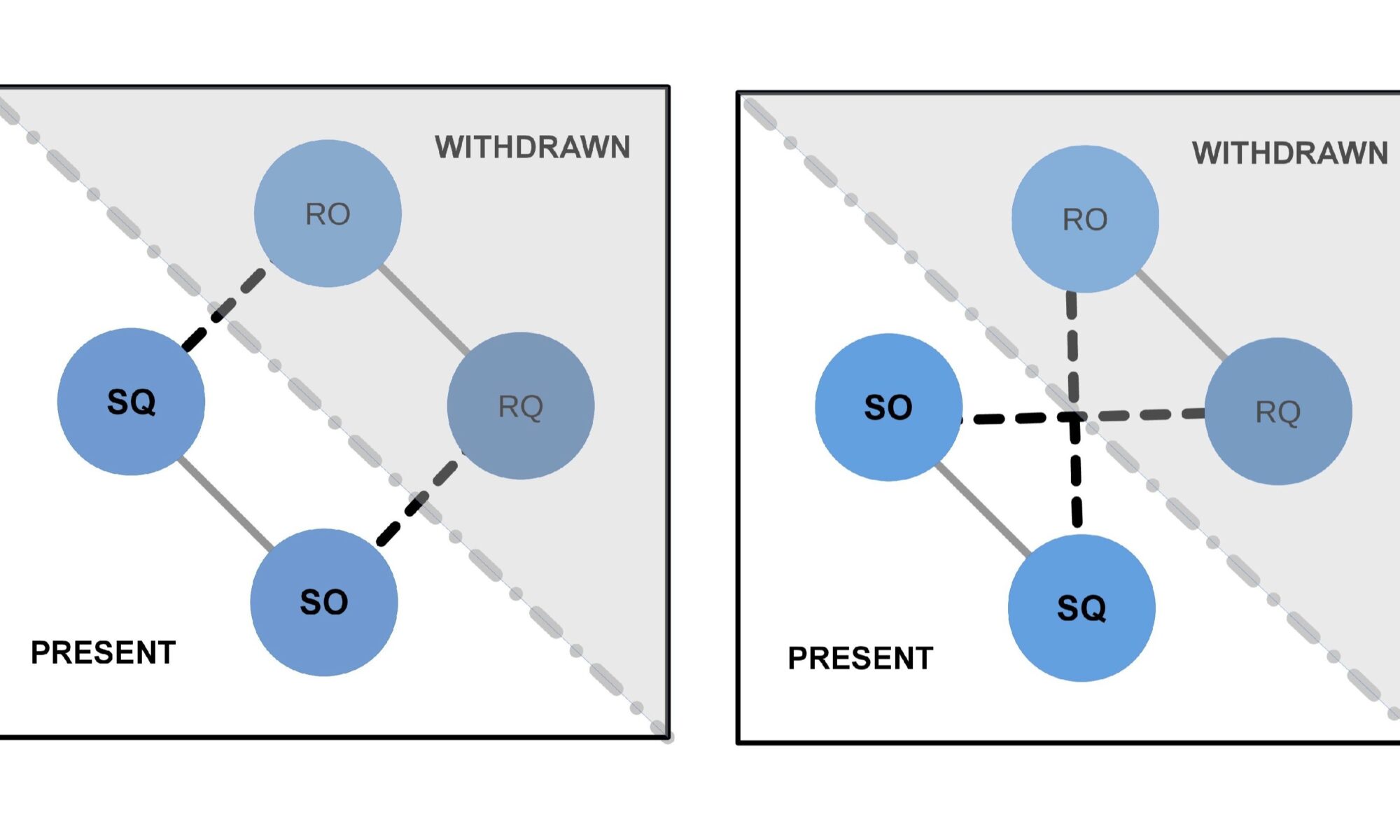
In my 2025 thesis, Mesotopia: Towards a Place of Lyrical Inquiry, I draw heavily on Graham Harman’s concept of The Quadruple Object. Harman suggests that any object – whether a stone, a poem, or a political idea – is held together by four poles: the real object (RO), the real quality (RQ), the sensual object (SO), and the sensual quality (SQ). These poles do not collapse into one another; instead, they are sustained by four tensions: time, space, essence, and eidos. For Harman, all objects – human and other-than-human alike – encounter one another through these tensions.

A key insight for me is this: objects endure precisely because they withdraw. Their essence is never fully accessible. I can touch a limpet, describe it, argue with it, write about it – but something always escapes me. This is not a failure of perception. It is the very condition that makes meaning possible.

Essence, then, names the tension between the real object and its real qualities, both of which remain partially withheld during any encounter. Time emerges as the tension between the sensual object and its sensual qualities. I know, for example, that a limpet has lived longer because its shell is rougher than the smoother shells of younger limpets. Space, meanwhile, is the tension between the sensual object and its real qualities. It is not the distance between objects, but the gap between the limpet as I encounter it and the real qualities that make it a limpet at all. I interpret eidos as something closer to intuition: the felt sense that arises as I try to conceive the real object through the sensual qualities available to me. I encounter a rough, conical shell and intuit the older limpet recoiling from my touch within.

The Mesotopian Event – building on Harman’s ‘Quadruple Object’

The diagram from my thesis helps to clarify this. The four poles are held apart, with certain relations fixed and others activated. The dashed lines mark moments of tension and movement. The mesotopian event occurs along these lines, where space and eidos interact while time and essence quietly hold their ground.

The mesotopian event happens when I consciously step into this condition. During such an encounter, two tensions remain fixed. Time is fixed because the encounter happens now – not in memory, not in projection, but in the present moment of attention. Essence is fixed because it remains withdrawn. No amount of cleverness will prise it open. It stays put, stubborn and generative.

What does move are space and eidos. I turn the sensual object – the object as it appears to me – through its sensual qualities. I attend to texture, rhythm, tone, association, metaphor. I let intuition lead rather than command. This turning is not analytical in the conventional sense; it is exploratory, almost playful. I am guessing at the object’s withheld essence, fully aware that I will never arrive – and that this is precisely the point.

I describe mesotopia as a place between conceptual and physical terrains. In that in-between space, encounters with objects reveal multiple agents of causation. Meaning is no longer a straight line from subject to object. Instead, it becomes something composed, situated and contingent.

Ultimately, the mesotopian event is an ethics of attention. It asks me to slow down, to resist the urge to dominate experience with explanation, and to trust that which withdraws is just as important as what appears. Meaning, in this view, is not something I extract from the world. It is something that happens between us – briefly, beautifully, and never quite the same way twice.

As always, my a’th kar!

I expand on this post in the following video:

References:

Harman, Graham. (2011) The Quadruple Object, Zero Books.

Verran, Tristan. (2025) Mesotopia: Towards a Place of Lyrical Inquiry. Thesis. University of Plymouth. https://pearl.plymouth.ac.uk/ada-theses/113/