
I have a lingering suspicion that every movement, no matter how exploratory or liberatory it begins, eventually generates its own clergy. The people who explain its meaning to the rest of us. Not the be-robed, incense-and-lace variety (though give it time), but the interpretive class – the ones who assure you that what you think you’re seeing isn’t quite what you’re seeing, and luckily, they have the key. This caste hasn’t vanished; it has simply donned the corporate drag of the professional-managerial class.
Mesotopia, at least as I understand it, refuses that comfort.
If mesotopia is anything, it is the awkward recognition that the world is real – stubbornly real – but never fully available. Objects exceed us. Systems exceed us. Institutions exceed us. Yet each of us possesses the capacity to make meaning through our encounters with the environments we inhabit. And this is the crucial point: that process does not require a priestly caste to mediate it. Partial revelation is not the same thing as authorised revelation.
We live in an age addicted to interpretation. Scroll any feed and you’ll find someone explaining what the data really means, what the conflict really signifies, what the text actually implies. It’s a lucrative posture. It flatters the explainer and infantilises the audience. The message is always the same: the real is too complex for you. Leave it to us.
Mesotopia pushes back.
If meaning happens in the encounter – if it is co-constituted in that charged space between me and what I meet – then no one gets to claim exclusive access to it. The mesotopian event is democratic in the most unsettling way. It insists that you are already implicated in the making of sense. There is no backstage pass.
This is not relativism. The world bites. History happened. Power concentrates. Money moves in very specific directions. But the claim that only a sanctioned cadre can interpret these realities is itself a power move. It is theology dressed up as theory.
You see it everywhere. In academia, it appears as jargon that sometimes functions less as precision and more as initiation rite. In activism, where sometimes a deviation from approved vocabulary can feel like heresy. In politics, where technocrats speak as though code and program were sacred texts decipherable only by the ordained.
Mesotopia requires a certain slowness – a willingness to dwell in encounter. Each experience is turned through association and intuition as we try to understand the environment in which we find ourselves. Yes, the real withdraws. Yes, structures operate beyond immediate perception. But that does not invalidate lived encounter; it intensifies its importance. The fact that we never grasp the whole does not mean we grasp nothing. It means we work provisionally, relationally, in good faith.
A priestly class thrives on the promise of total vision. Mesotopia is content with fragments.
There is something profoundly anti-authoritarian about admitting that revelation is always partial. It levels the field. It allows disagreement without excommunication. It acknowledges that I might hear something you don’t, and you might notice something I’ve missed – not because one of us is enlightened, but because we are differently positioned within the same recalcitrant world.
The danger, of course, is that mesotopia itself becomes doctrine. That someone eventually writes the catechism: “Thou shalt interpret thus.” I can already hear the conference panels.
So let me be clear. This is not a retreat into the political monad, nor a New Age hymn to the sovereign self. We are not isolated atoms floating above our biological or socio-political milieu. Our environments include community, history, institutions and power. Meaning-making happens within those entanglements, not outside them. Nor do I believe in some private enlightenment waiting at the end of sufficient introspection.
Mesotopia is not a ladder to ascend above others. It is a reminder that we are already entangled in something that exceeds us – and that none of us owns the veil.
No robes. No incense. No vestments. No authorised intermediaries.
Just the difficult, ordinary work of meeting a world that will never fully disclose itself – and refusing to let anyone claim exclusive rights to its mystery.
As always, my a’th kar!
I discuss this post in more detail on my YouTube channel:
References:
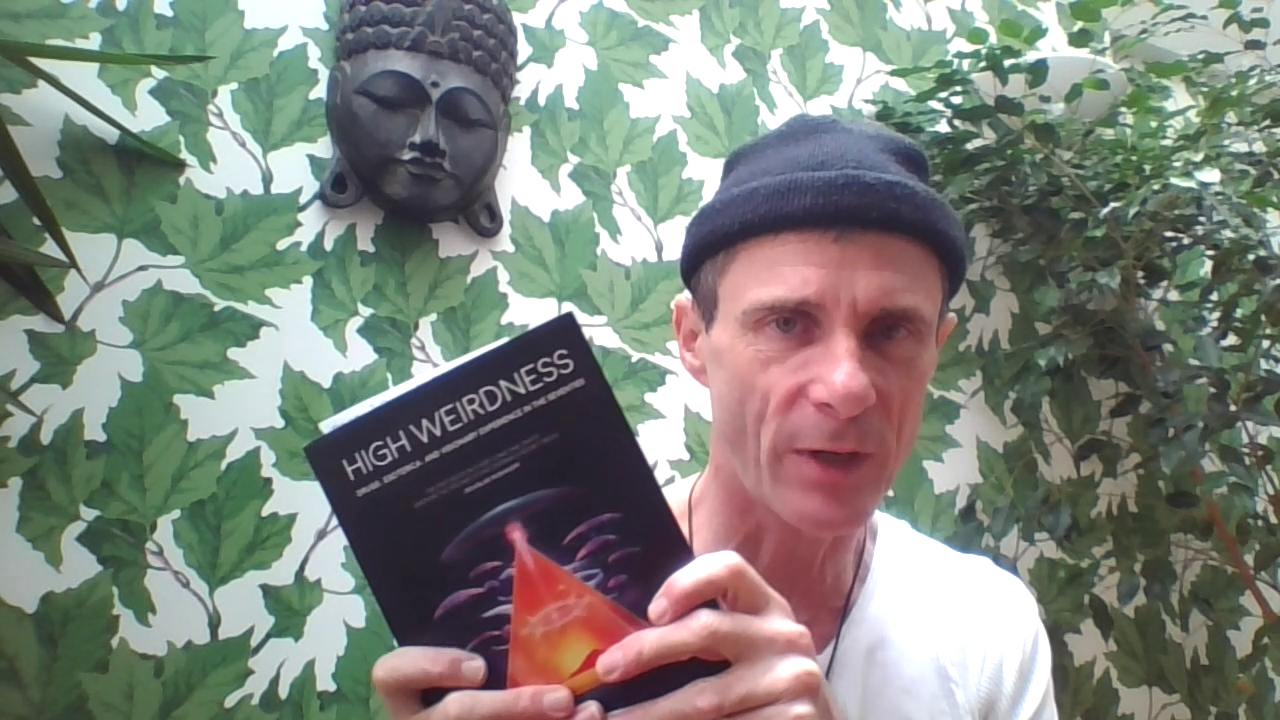
Davis, Erik. (2019). High Weirdness: Drugs, Esoterica, and Visionary Experience in the Seventies. MIT Press.
Verran, Tristan. (2025) Mesotopia: Towards a Place of Lyrical Inquiry. University of Plymouth Archive.