Mesotopia: Significant Findings and Contributions. Partial Revelation

If you spend nearly ten years on a thing – a thesis, a question, an ache – then what do you come away with? This is a problem that many researchers wrestle with long after their viva.

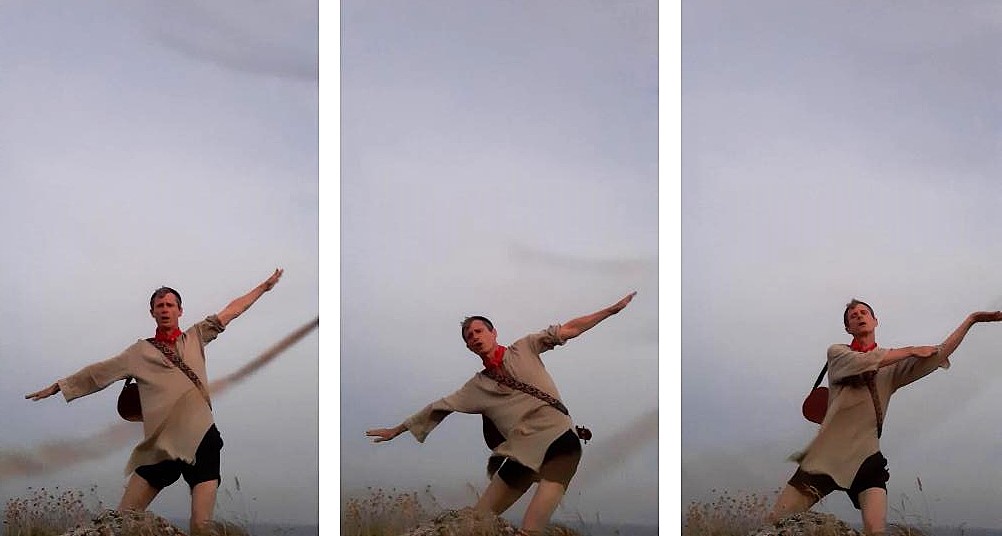
Tryg on the Coast by Will Halfacree

My thesis, Mesotopia: Towards a Place of Lyrical Inquiry (Verran, 2025), emerged from my exploration into the murky realm of meaning-making; into how humans make sense of their environment and articulate this through the art of language. While engaging with methods and approaches of scientific materialism, it was open to other, less quantifiable aspects of understanding. My approach exists between the hard data of environmental science and the soft collapse of attributing a lyrical utterance to a physical sensation. Mesotopia is that middle place. It is a weird, damp, mossy ground where you are forced to admit that you’re guessing, and that guess, that intuition, is something beautiful.

Here’s what I’ve learned, and I offer it not as truth but as partial revelation: all environmental research ends in conjecture. You can measure carbon flux. You can map watersheds, but the moment you ask why – why the tide is rising, why the magpie sings – then you have left the laboratory and entered the weirder world of the poetic. This requires intuition; not as a substitute for rigour, but as its strange twin. The best researchers I know don’t pretend to be robots or LLMs. They listen for what the data doesn’t say.

This became painfully clear when I tried to get a clean historical picture of Celtic culture. I wanted something tethered to the languages themselves: Old Kernewek, the living breath of Breton fragments. What I found instead was a hall of mirrors. There are no objective sources. Texts were scripted by either a monk or a cultist with an agenda. Every archaeological layer has been interpreted by a romantic, a nationalist or a grant committee. Anyone who proclaims certainty about Celtic culture should be eyed the way you’d eye a man selling miracle water from the back of a van.

This is the deeper sickness. Doing a PhD means watching how the money moves. You see funding streams shape ideological and political directions for corporate profit: pharmaceuticals, tech, and weapons. These industries don’t just buy labs. They buy histories too. They buy the humanities, indirectly, turning entire departments into PR factories churning out favourable narratives. There are red lines and guardrails everywhere. You learn them quickly. Don’t scrutinise the military applications or environmental impacts of all this wonderful new tech. Don’t question the ethics of corporate influence on land use. Don’t look at the family backgrounds of financiers recently termed ‘philanthropists’. Do that, and the funding dries up. The list goes on. This is the unspoken rule – to have any kind of career in Western academia, you need to learn when to keep your mouth shut.

I finished my PhD less certain about what is real. So much of academic work seems to be about inventing reality for other people to live in. I admit that I can never find my way through all the misdirections and dead ends, and that any meaningful clarity eludes me. On reflection, I don’t see that as a failure. That is the crack where light gets in. I’ve glimpsed the man behind the velvet curtain of western liberalism, working his bells and whistles and selling his snake oil, and I don’t believe him anymore. I do not believe in the neutrality of universities, nor in the clean hands of Western research culture.

I live in partial revelation. I am always listening. I am certain of nothing and sceptical of everything. However, I can still hope that somewhere – in a different kind of institution with a different way of asking – there is a place where intuition is honoured, funding doesn’t own the questions, and any person is free to research, interrogate or argue controversial positions.

As always, my a’th kar!

Follow this link to a video where I discuss this blog in more detail:
 

Mesotopia: Significant Findings and Contributions

If you are looking for neat conclusions, this isn’t that kind of project. Indeed, I suggest that if you are looking for neat conclusions – you’re probably missing a big part of what makes research interesting. After years of wrestling with sites, words, and the strange space between being in a place and thinking about how I understand it, I have not found a tidy set of answers. Instead, I’ve landed somewhere more interesting: a conviction that meaning is made through a subtle interplay between the environment, the body and the mind. I’ve also found that different forms of expression demand different metaphysics – different philosophies of interpreting what is real – to turn these environmental encounters into something that can be communicated.

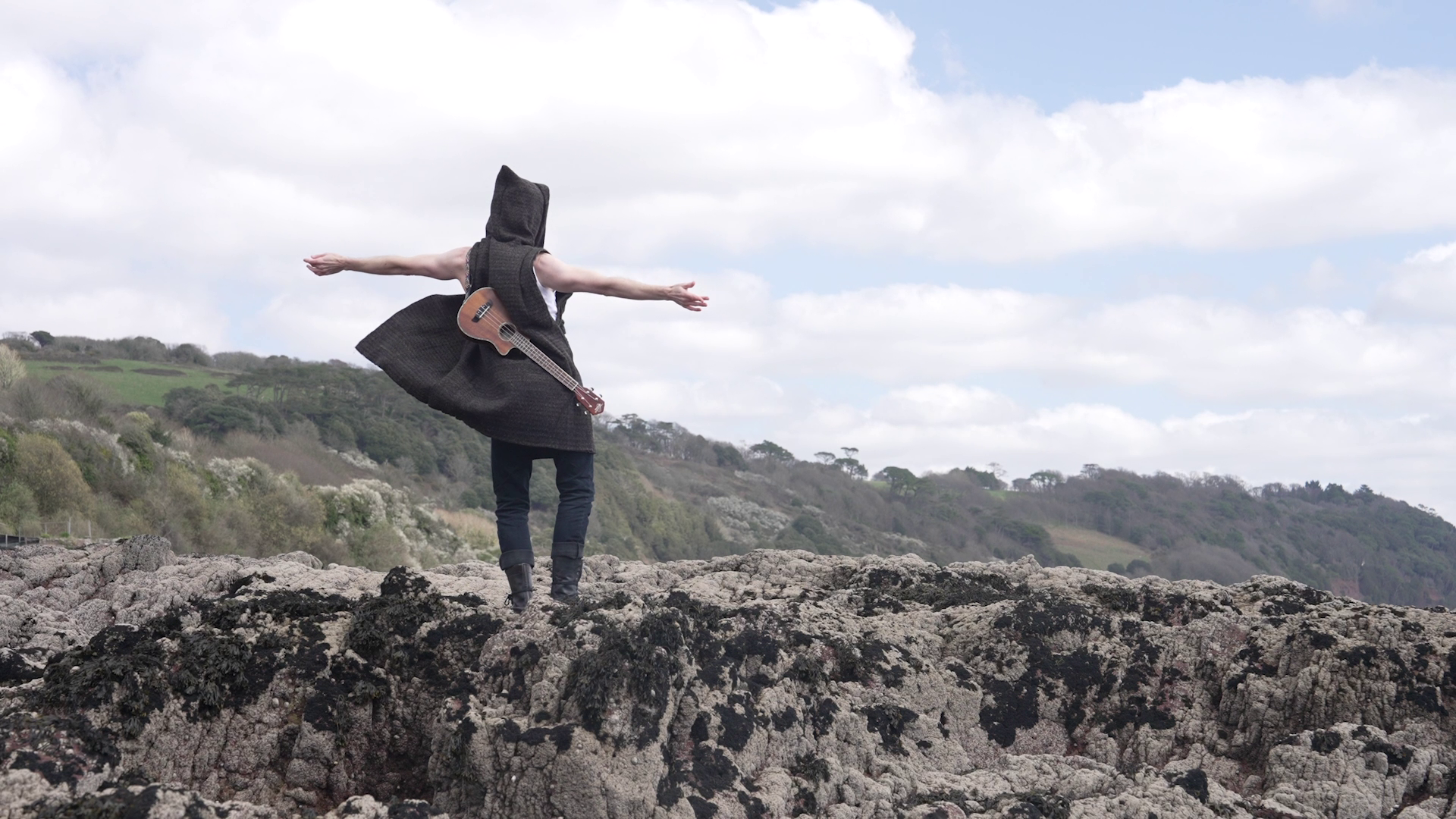
Tryg on the Coast by Will Halfacree

Let me put that another way. If you’re making a dance, you might need to focus more on theories that conceive a universe of energies and flows, as these are better suited to speaking about movement. However, if you’re making a lyric about an environmental encounter, you need a little distance to process the encounter, therefore theories that convey a universe of substances. And if you’re trying to make sense of the world while moving through it, then you might need to employ a theory that sits between theories of substances and flows.

Mesotopia, a middle place, is my attempt to do this. It is a place where physical things meet conceptual things, a place of substances and flows, a practice that sits between theory and experience, between knowing and not-knowing. I have found that a theory of object-oriented ontology (OOO), as advanced by Graham Harman, has proven to be really helpful when talking about mesotopia and mesotopian logic.

One of the more unexpected findings of my research is that the Cornish language – Kernewek – is structurally more suited to object-oriented thinking than English. I looked at three features of the Kernewek language that differ from the English language. Firstly, the use of pronominal prepositions; secondly, the favouring of predicate-led constructions; finally, the way nouns often sit before modifiers. I have found that these are not just grammatical quirks. I suggest that they build a world where things don’t exist merely as props for chattering human subjects. In Kernewek, the language itself leans into the idea that objects have their own stubborn presence. English, by contrast, keeps trying to put the speaking subject in the driver’s seat.

When you are trying to express your understanding of the world, the form that communication takes matters. I have found that parataxis – placing phrases side by side without explicit connections – is more significant than syntax for expressing relations to the environment. You don’t explain the space. You juxtapose. You let things sit next to each other, and the space between them does the work. What is the subtle difference between a phrase like ‘good day’ or ‘dydh da’ (literally ‘day good’)? Well, I advance the idea that the English phrase prioritises the subject’s opinion, ‘good’, over the object, ‘day’. Whereas the Kernewek version acknowledges the object, ‘dydh’, before the speaker’s opinion, ‘da’. It’s a subtle difference; however, I propose that this difference articulates a slightly different perspective of my understanding of what a day actually is.

It is useful to consider the significance of Graham Harman’s notion of ‘space’ here. Space, in this sense, is the distance between my physical encounter with an object and the object as I have conceived it in its totality. My physical encounter with a ‘day’ is comprised of various sensory events, such as registering the difference between darkness and light. However, there is much to a day that eludes my certainty – the totality of my understanding of a ‘day’ involves substances and flows that elude my senses, such as planetary objects and rotations. Therefore, the human concept of ‘day’ is simply an educated guess of what a day actually is, and whether or not it is ‘good’ is a human imposition. What’s ‘good’ for humans might not necessarily be ‘good’ for seagulls.

Perhaps the most delicate finding – the one that’s often most difficult for me to explain in simple terms – is this: my understanding of my environment mimics a sensation of knowing, but it’s actually rooted in an experience of not-knowing. For example, my practice of communicating my understanding of my environment involves lyrical composition. While these compositions feel like they’re delivering understanding, what they’re really doing is performing the condition of being amidst things I can’t fully grasp. Hence, I find that I exist in a world of partial revelation.

So no, there are no definitive conclusions here. There is a clearer sense that if you want to understand a place, you have to accept that the place – and the objects within it – keep their secrets. That means finding a philosophy, a language, a compositional practice that doesn’t translate everything back into human terms.

As always, my a’th kar!

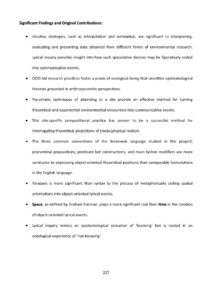
Page 227 from Verran (2025) provides a summary of significant findings:

Summary of Significant Findings and Contributions (Verran, 2025)

Mesotopia: ‘High Weirdness’ Against a Priestly Class.

I have a lingering suspicion that every movement, no matter how exploratory or liberatory it begins, eventually generates its own clergy. The people who explain its meaning to the rest of us. Not the be-robed, incense-and-lace variety (though give it time), but the interpretive class – the ones who assure you that what you think you’re seeing isn’t quite what you’re seeing, and luckily, they have the key. This caste hasn’t vanished; it has simply donned the corporate drag of the professional-managerial class.

Mesotopia, at least as I understand it, refuses that comfort.

If mesotopia is anything, it is the awkward recognition that the world is real – stubbornly real – but never fully available. Objects exceed us. Systems exceed us. Institutions exceed us. Yet each of us possesses the capacity to make meaning through our encounters with the environments we inhabit. And this is the crucial point: that process does not require a priestly caste to mediate it. Partial revelation is not the same thing as authorised revelation.

We live in an age addicted to interpretation. Scroll any feed and you’ll find someone explaining what the data really means, what the conflict really signifies, what the text actually implies. It’s a lucrative posture. It flatters the explainer and infantilises the audience. The message is always the same: the real is too complex for you. Leave it to us.

Mesotopia pushes back.

If meaning happens in the encounter – if it is co-constituted in that charged space between me and what I meet – then no one gets to claim exclusive access to it. The mesotopian event is democratic in the most unsettling way. It insists that you are already implicated in the making of sense. There is no backstage pass.

This is not relativism. The world bites. History happened. Power concentrates. Money moves in very specific directions. But the claim that only a sanctioned cadre can interpret these realities is itself a power move. It is theology dressed up as theory.

You see it everywhere. In academia, it appears as jargon that sometimes functions less as precision and more as initiation rite. In activism, where sometimes a deviation from approved vocabulary can feel like heresy. In politics, where technocrats speak as though code and program were sacred texts decipherable only by the ordained.

Mesotopia requires a certain slowness – a willingness to dwell in encounter. Each experience is turned through association and intuition as we try to understand the environment in which we find ourselves. Yes, the real withdraws. Yes, structures operate beyond immediate perception. But that does not invalidate lived encounter; it intensifies its importance. The fact that we never grasp the whole does not mean we grasp nothing. It means we work provisionally, relationally, in good faith.

A priestly class thrives on the promise of total vision. Mesotopia is content with fragments.

There is something profoundly anti-authoritarian about admitting that revelation is always partial. It levels the field. It allows disagreement without excommunication. It acknowledges that I might hear something you don’t, and you might notice something I’ve missed – not because one of us is enlightened, but because we are differently positioned within the same recalcitrant world.

The danger, of course, is that mesotopia itself becomes doctrine. That someone eventually writes the catechism: “Thou shalt interpret thus.” I can already hear the conference panels.

So let me be clear. This is not a retreat into the political monad, nor a New Age hymn to the sovereign self. We are not isolated atoms floating above our biological or socio-political milieu. Our environments include community, history, institutions and power. Meaning-making happens within those entanglements, not outside them. Nor do I believe in some private enlightenment waiting at the end of sufficient introspection.

Mesotopia is not a ladder to ascend above others. It is a reminder that we are already entangled in something that exceeds us – and that none of us owns the veil.

No robes. No incense. No vestments. No authorised intermediaries.

Just the difficult, ordinary work of meeting a world that will never fully disclose itself – and refusing to let anyone claim exclusive rights to its mystery.

As always, my a’th kar!

I discuss this post in more detail on my YouTube channel:

References:

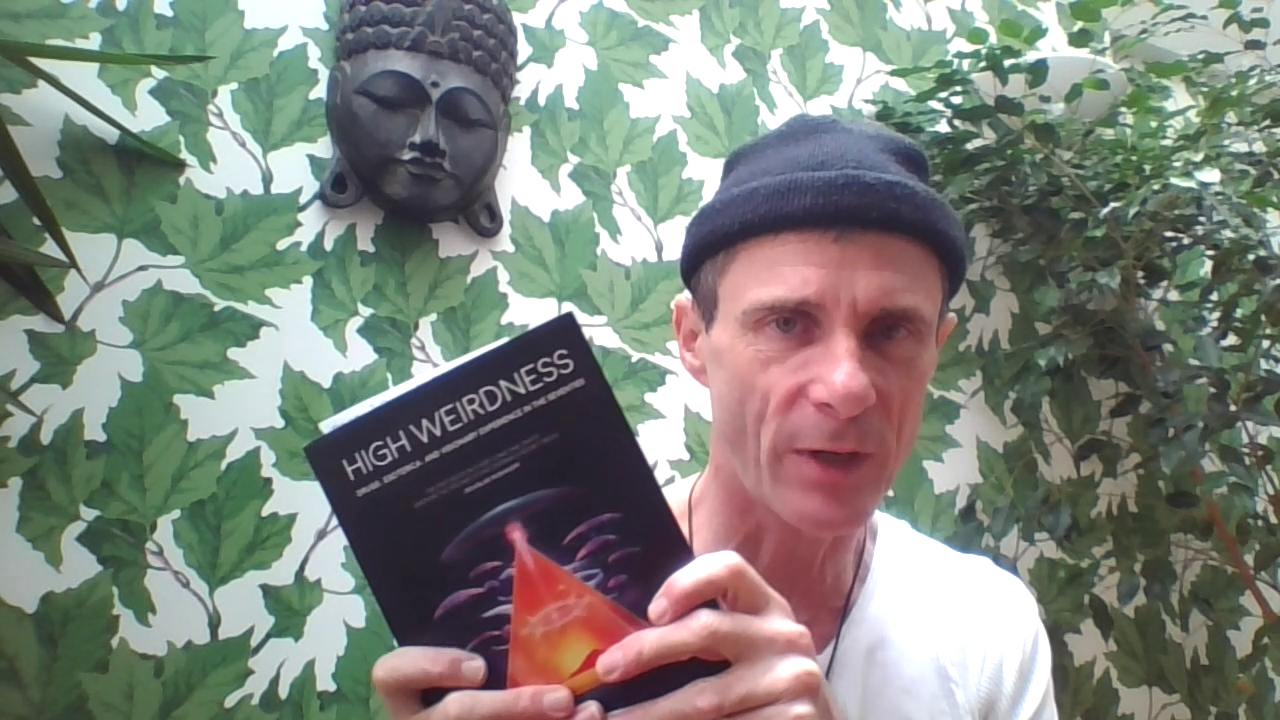
Davis, Erik. (2019). High Weirdness: Drugs, Esoterica, and Visionary Experience in the Seventies. MIT Press.

Verran, Tristan. (2025) Mesotopia: Towards a Place of Lyrical Inquiry. University of Plymouth Archive.

Mesotopia: Towards a Politics of Partial Revelation

One of the quietly awkward things about Object-Oriented Ontology (OOO) is watching very clever people try to prise a politics out of it without breaking the crockery. Graham Harman tends to sidestep the issue, while Timothy Morton leans into it with a kind of earnest bravado. Morton’s move toward ecognosticism, and the attempt to locate this within a Marxist framework in texts like Humankind, is genuinely interesting. However, it also feels slightly misaligned. Classic Marxism is grounded in class analysis, historically specific struggles, and the evaluation of material and economic exploitation. OOO, by contrast, flattens the ontological field. Everything withdraws. Everything is weird. The risk is that a politics emerging from OOO may be interpreted less as a material project and more as a kind of nihilistic mood that risks favouring apathy over engagement.

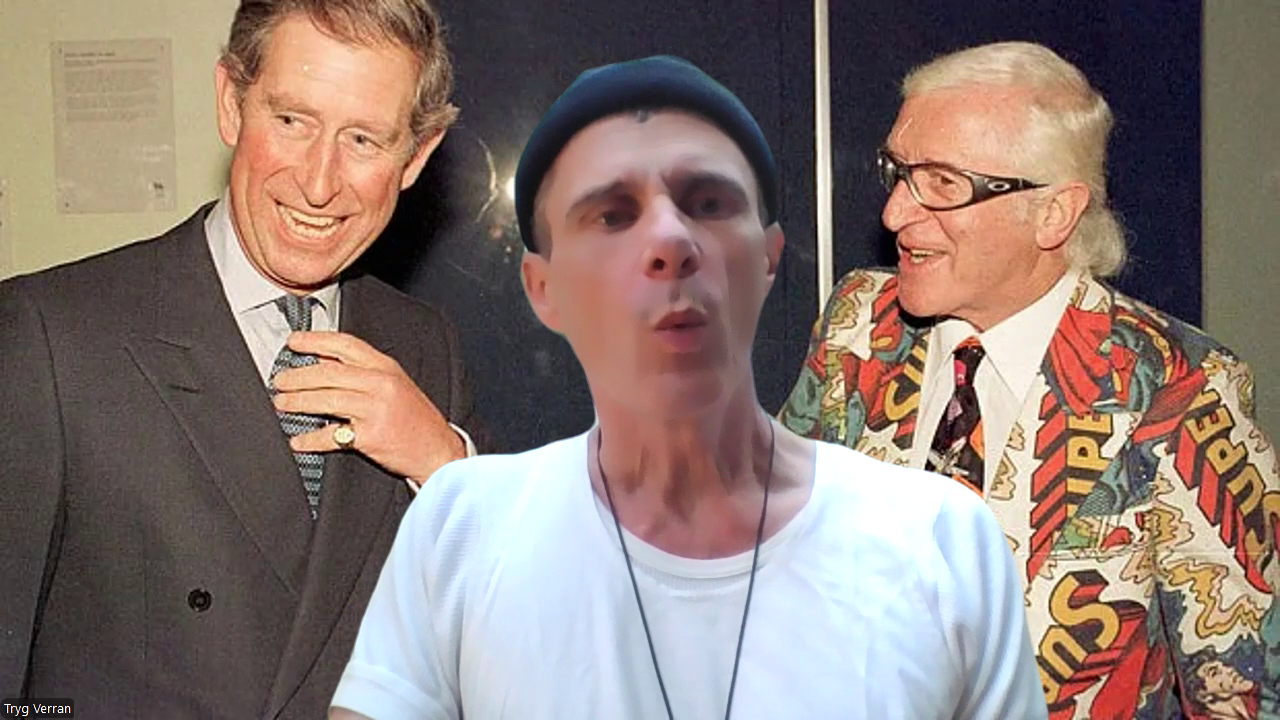
The former Duke of Cornwall with his long-time friend and confidant ‘James’.

I explore this tension more fully in my thesis, Mesotopia: Towards a place of lyrical inquiry, but the short version is this: I admire the effort to push OOO into the political sphere, even when I don’t think it quite lands – and that misfiring is instructive, because it reveals something important about knowledge itself.

While researching the mechanics of mesotopian meaning-making, it became increasingly obvious to me that all research, no matter how rigorous, eventually arrives at a moment of pure conjecture. There is always a moment where the evidence runs out and interpretation takes over. Mesotopia names this space. I live here. We all do, whether we admit it or not. It is a state of partial revelation.

This is not as exotic as it sounds. In fact, it has deep resonances with classic Marxism and even elements of Maoism, where political life is understood to be structurally occluded. Much is withheld – not necessarily because it is illegal, but because it would be politically embarrassing, destabilising, or simply inconvenient if widely known. The very existence of scandals that sit at the periphery of respectable political discourse – such as Operation Gladio or Jeffrey Epstein – points to this condition. Power does not announce itself clearly. Decisions are made elsewhere, in rooms you and I, dear reader, are not invited into, using codes and languages we have not been taught to speak.

My own experiences of working at the fringes of empire have only reinforced my thinking here. I do not know the truth of political machinations at the highest level, but I do know, with absolute certainty, that the general public does not know everything either. This isn’t paranoia. It isn’t fear. It’s political realism.

Often in my research, I return to old-fashioned historical materialist strategies – following flows of money, mapping institutional relationships, noting who funds whom and why. These methods can clarify motivations and alliances that otherwise seem baffling. However, they do not constitute conclusive proof of wrongdoing. Many financial arrangements are perfectly legal. They are simply hidden because they don’t look good under fluorescent light.

This is why I’ve found Erik Davis’s approach in High Weirdness so refreshing. Davis manages to acknowledge the unknown, the speculative, and the unresolved without sliding into mockery or credulity. He takes uncertainty seriously.

I encountered something similar while researching the Cornish language. I plotted the publishing output of writers who have subtly pushed narratives of Baltic and Celtic nationalisms and arrived at a moment of conjecture – why are they doing this? I also didn’t understand why certain groups of people attended some Celtic language meetings. I still don’t. I will never know the inner motives of esoteric groups. Mesotopia teaches me to live with that – not as resignation, but as orientation. Not knowing is not a failure. It is the condition of political life. However, this does not mean that we simply accept ‘not knowing’ as a reason for ‘not doing’. On the contrary, I suggest that a politics of partial revelation encourages us to continue to participate in a project to attend to our local environments even though we cannot possibly know everything.

I can state what I know and intuit what I don’t.

From my research, I observe that industrialists, financiers, and right-wing factions often push nationalist narratives to appeal to the sensibilities of certain minority groups. For what ultimate reason, I cannot know; my intuition, however, is to remain sceptical of their intentions. Partial revelation is the rule, not the exception, and politics begins not with certainty, but with the refusal to be paralysed by its absence.

As always, my a’th kar!

You can follow this link for a video discussion of this blog:

References:
(1) Davis, Erik. (2019). High Weirdness: Drugs, Esoterica, and Visionary Experience in The Seventies. The MIT Press.
(2) Harman, Graham. (2016). Immaterialism: Objects and Social Theory. Polity.
(3) Morton, Timothy. (2017). Humankind: Solidarity with Non-human People. Verso.
(4) Verran, Tristan. (2025). Mesotopia: Towards a Place of Lyrical Inquiry. The University of Plymouth. https://pearl.plymouth.ac.uk/ada-theses/113/

Introducing The Mesotopia: Living Between Physical and Symbolic Worlds

I often begin by saying that my approach to meaning-making differs sharply from the purely materialist assumption that ‘there is a real world and it can be known’. The mesotopian position, by contrast, begins from the more unsettling but, I think, more honest claim: there is a real world, but it can never be completely known. This is not a retreat into relativism or mysticism; indeed, I argue for demystifying the process of meaning-making. I advance a philosophy of embodied recognition that every act of knowing is situated, partial, and mediated through the strange vehicle of human experience.

In the mesotopia, meaning arises not from the fixed solidity of matter, nor from the abstract play of language, but in the dynamic, lived zone where sensing, thinking, and doing meet. The prefix meso- means “middle,” and it’s in this middle terrain that I locate philosophy as a practice, not as a system. It’s a space of tension, friction, and constant negotiation—where perception and intuition interweave to produce what we take to be “the real.”

Materialism offers the comfort of certainty: a belief that, if we look hard enough, we can strip away illusion and stand before reality as it truly is. The mesotopian approach rejects that fantasy. Instead, it invites us to dwell in partial revelation—to see knowledge as a series of embodied engagements that illuminate fragments of the world while inevitably casting others into shadow. What we call “understanding” is not the conquest of the unknown, but a dance with its irreducible strangeness.

This is where the idea of weirdness enters. In my work, weirdness isn’t about the quirky or bizarre, but about that unsettling quality that appears when reality refuses to be fully domesticated by human thought or desire. The weird announces itself when our conceptual frameworks falter—when the world shows itself to be more alive, more complex, more surprising than our categories allow. Weirdness, then, is not an obstacle to meaning but the sign of meaning’s vitality. It’s the pulse that reminds us we are both active and passive participants in a strange confederation of things that keep their secrets.

In the mesotopia, to encounter weirdness is to encounter reality itself. Our bodies, our gestures, our creative acts—these are not secondary to thought but integral to it. The way we move, speak, and make art are all ways of negotiating that strange boundary between what can be known and what forever escapes categorisation. Philosophy, in this sense, becomes an art of attunement—a way of staying sensitive to the rhythms of a world that exceeds our grasp.

So the mesotopian project is neither to master the real nor to deny it. It is to inhabit it—to live in that fertile middle space where knowledge and mystery coexist, where the world’s weirdness is not a problem to solve but a companion to think with. To be mesotopian is to make meaning a bodily act, to feel thought as movement, and to accept, joyfully, that the real will always remain just beyond the horizon of what we can name.

As always, my a’th kar.

x

A link to an informal vlog discussing this blog can be found here:

A link to my recent thesis in The University of Plymouth’s archives can be found here:

https://pearl.plymouth.ac.uk/ada-theses/113/