Mesotopia: Significant Findings and Contributions. Partial Revelation

If you spend nearly ten years on a thing – a thesis, a question, an ache – then what do you come away with? This is a problem that many researchers wrestle with long after their viva.

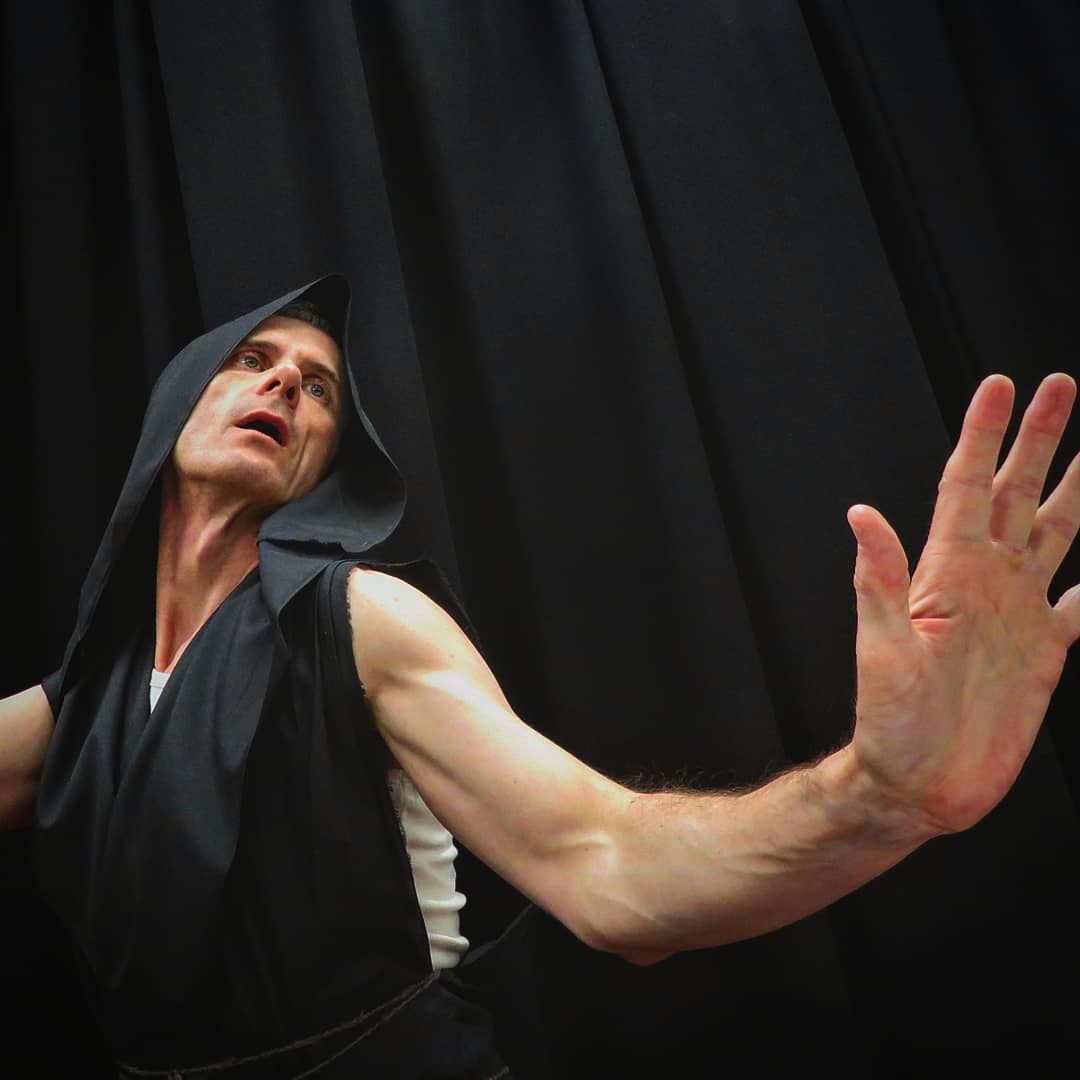
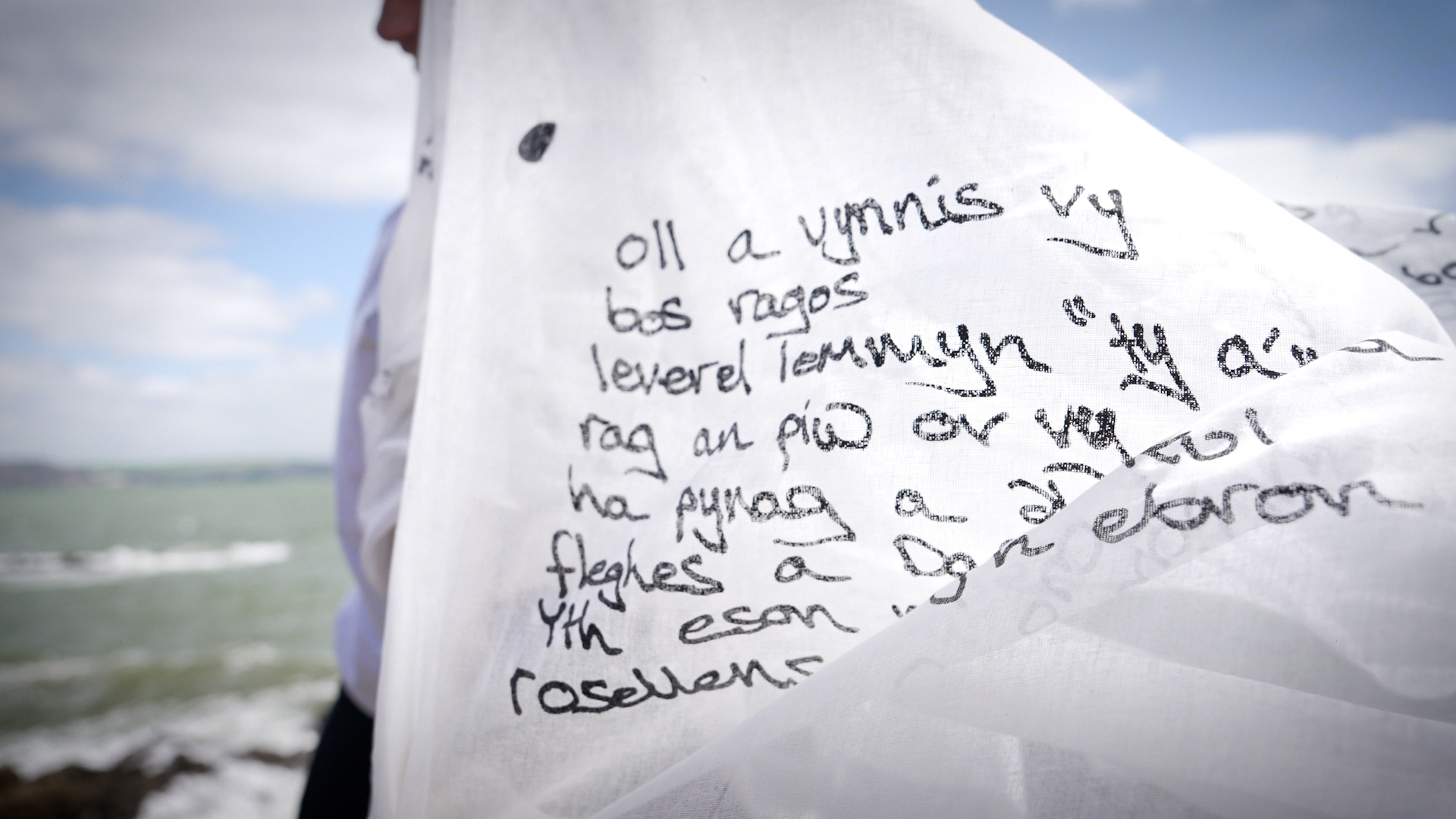
Tryg on the Coast by Will Halfacree

My thesis, Mesotopia: Towards a Place of Lyrical Inquiry (Verran, 2025), emerged from my exploration into the murky realm of meaning-making; into how humans make sense of their environment and articulate this through the art of language. While engaging with methods and approaches of scientific materialism, it was open to other, less quantifiable aspects of understanding. My approach exists between the hard data of environmental science and the soft collapse of attributing a lyrical utterance to a physical sensation. Mesotopia is that middle place. It is a weird, damp, mossy ground where you are forced to admit that you’re guessing, and that guess, that intuition, is something beautiful.

Here’s what I’ve learned, and I offer it not as truth but as partial revelation: all environmental research ends in conjecture. You can measure carbon flux. You can map watersheds, but the moment you ask why – why the tide is rising, why the magpie sings – then you have left the laboratory and entered the weirder world of the poetic. This requires intuition; not as a substitute for rigour, but as its strange twin. The best researchers I know don’t pretend to be robots or LLMs. They listen for what the data doesn’t say.

This became painfully clear when I tried to get a clean historical picture of Celtic culture. I wanted something tethered to the languages themselves: Old Kernewek, the living breath of Breton fragments. What I found instead was a hall of mirrors. There are no objective sources. Texts were scripted by either a monk or a cultist with an agenda. Every archaeological layer has been interpreted by a romantic, a nationalist or a grant committee. Anyone who proclaims certainty about Celtic culture should be eyed the way you’d eye a man selling miracle water from the back of a van.

This is the deeper sickness. Doing a PhD means watching how the money moves. You see funding streams shape ideological and political directions for corporate profit: pharmaceuticals, tech, and weapons. These industries don’t just buy labs. They buy histories too. They buy the humanities, indirectly, turning entire departments into PR factories churning out favourable narratives. There are red lines and guardrails everywhere. You learn them quickly. Don’t scrutinise the military applications or environmental impacts of all this wonderful new tech. Don’t question the ethics of corporate influence on land use. Don’t look at the family backgrounds of financiers recently termed ‘philanthropists’. Do that, and the funding dries up. The list goes on. This is the unspoken rule – to have any kind of career in Western academia, you need to learn when to keep your mouth shut.

I finished my PhD less certain about what is real. So much of academic work seems to be about inventing reality for other people to live in. I admit that I can never find my way through all the misdirections and dead ends, and that any meaningful clarity eludes me. On reflection, I don’t see that as a failure. That is the crack where light gets in. I’ve glimpsed the man behind the velvet curtain of western liberalism, working his bells and whistles and selling his snake oil, and I don’t believe him anymore. I do not believe in the neutrality of universities, nor in the clean hands of Western research culture.

I live in partial revelation. I am always listening. I am certain of nothing and sceptical of everything. However, I can still hope that somewhere – in a different kind of institution with a different way of asking – there is a place where intuition is honoured, funding doesn’t own the questions, and any person is free to research, interrogate or argue controversial positions.

As always, my a’th kar!

Follow this link to a video where I discuss this blog in more detail:


On Celtic Nationalisms: (Aside) Why Does the UK Keep Spawning Strange Esoteric Cults?

While researching my PhD thesis, Mesotopia: Towards a Place of Lyrical Inquiry (2025), I spent considerable time visiting Celtic language communities and Celtic nationalist meetings across Britain. I went expecting to find what I’d romanticised: the last strongholds of living tradition, people gathering in draughty village halls to keep the old words breathing. What I found instead puzzled me deeply, and has since forced me to rethink my entire understanding of Celtic nationalisms and their revival.

Many of these gatherings were as I had imagined and were in village halls, but at some of these gatherings, I kept meeting members of esoteric orders, like Zionists and Mormons. They sat among Kernewek learners and Celtic nationalists, and I found myself asking the obvious question: what on earth are you doing here?

The answer is stranger than I expected.

The Hebrew Connection:

The links with Zionism emerge from something specific: the revival of the ancient Hebrew language. For many language activists, Hebrew stands as the great success story – a language of liturgy returned to public places. Israeli groups provided practical advice and strategies for growing the Welsh language during the latter half of the 20th century.

Beneath this practical solidarity lurked something more theological. For certain strands of Zionist thought, particularly those influenced by figures like Abraham Isaac Kook, the return to the Land and the revival of Hebrew were not merely nationalist projects but messianic events. So, if the revival of Hebrew carried political and theological significance for funders of the state of Israel, what of the revival of Welsh or Cornish? Is there some hidden financial or theological motive?

A Landscape of Secrets:

The truth is that the United Kingdom has long been a factory for esoteric orders that shape the political world from the shadows. We manufacture them the way Switzerland manufactures cuckoo clocks. To ignore this fact is to misunderstand our history. The history of the UK is littered with secret fraternities of posh boys performing rituals and rites. As ridiculous as they might seem to the uninitiated outsider – these people seem to believe whatever it is they are doing. Aleister Crowley alone spawned an evolving line of Thelemic sex cults, with their “Do what thou wilt” and elaborate initiations for posh boys and poets. The Hermetic Order of the Golden Dawn, the Ordo Templi Orientis, the Typhonian Order – each has promised hidden knowledge to privileged devotees, and many of their practices still reverberate through respectable contemporary societies.

Then there are the British Israelites, who emerged properly in the 19th century with the claim that the British people are literally descended from the Ten Lost Tribes of Israel. John Wilson’s Our Israelitish Origin (1840) gave the movement its founding text, and by the 1880s, Anglo-Israel associations had sprouted across Britain. These were not fringe eccentrics in any simple sense – they included clergy, peers, and at their peak claimed millions of sympathisers throughout the former colonies. It’s no surprise that ideas from the British Israelites heavily influenced the Mormon church in the United States.

And yes – the modern Zionist movement itself, in its current ethno-nationalist political form, emerged from late 19th-century Europe. These aren’t just eccentric social clubs; the reason the US Empire has evolved into a crusading force obsessed with prophecy and rapture, or the state of Israel has become an ethno-supremacist state is because of weird fringe ideas that have gestated right here in the UK. The quirks of many of these cults tap into the same soil of romantic nationalism, biblical prophecy, and the conviction that ancient peoples could be reassembled in the present.

What Do They Want?

The ultimate goals of these secret esoteric societies remain, by design, hidden. We live in what I call a state of partial revelation – we glimpse fragments, but never the full machinery. Theosophists spoke of a coming World Teacher. Crowley announced the Aeon of Horus. British Israelites anticipated the restoration of the Davidic throne through the British monarchy. According to researcher of the occult Tracy Twyman, some secret societies have sought out a mythical ‘twilight language’ which conveys secret knowledge – this might explain an interest in old languages like Hebrew, Welsh, or even Cornish. The more I look into the work of figures like Edward Williams (also known as ‘Iolo Morganwg’) or Robert Morton Nance, the more I become sceptical of their motives or methods. Whatever their goals, scattered through all of the secret societies runs a thread of sectarianism, of chosen peoples, and of elect nations.

What becomes clear, viewed from ground level, is that such groups consistently function against the interests of the uninitiated – which means the common people. They work to create division – to balkanise not only territories but imaginations. The English Mistery of the 1930s, with its mystical feudalism and its “kins” of racially pure Englishmen, sought to roll back democracy and reinstate aristocratic rule. Rolf Gardiner, one of its leaders, wrote explicitly in German journals about reviving long-lost Germanic traditions in the English social order. These are not harmless antiquarians – they are architects of division, fear and paranoia.

Demystifying the Mystery:

Mesotopian logic demands a demystification of meaning-making. Not the crude demystification that pretends mystery doesn’t exist – we can never fully know the real world, and any claim to total knowledge is itself a power move. Rather, an honest demystification that names what is not known, that refuses the priestly gesture of hiding operations behind ritual.

Celtic languages do not belong to esoteric orders. They do not belong to neo-feudal aristocrats or digital landlords or prophets of racial destiny. They belong to the communities that speak them, learn them, dream in them – communities of ordinary people trying to hold onto something precious. The mystifiers would turn these languages into keys to hidden kingdoms. I say: let these languages remain what they are – words for sea and rock and magpie, for love and loss and the hope of conveying something meaningful or, dare I say, beautiful.

As always, my a’th kar.

I discuss this blog in more detail in the video:

References:

Allen, J.H. (1917) Judah’s Sceptre and Joseph’s Birthright. 15th edn. Haverhill, MA: Destiny Publishers. [Originally published 1902].

Armstrong, H.W. (2005) The United States and Britain in Prophecy. Edmund, OK: Philadelphia Church of God. [Originally published 1954].

Bogdan, H. and Starr, M.P. (eds.) (2012) Aleister Crowley and Western Esotericism. Oxford: Oxford University Press.

Carew, M. (2003) Tara and the Ark of the Covenant: A Search for the Ark of the Covenant by British-Israelites on the Hill of Tara (1899-1902). Dublin: Discovery Programme/Royal Irish Academy.

Dietz, B. (2018) ‘Sanderson, William John’, in Oxford Dictionary of National Biography. Oxford: Oxford University Press.

Green, E.H.H. (2002) Ideologies of Conservatism: Conservative Political Ideas in the Twentieth Century. Oxford: Oxford University Press.

Griffiths, R. (1980) Fellow Travellers of the Right: British Enthusiasts for Nazi Germany, 1933-9. London: Constable.

Hedenborg White, M. (2020) ‘Rethinking Aleister Crowley and Thelema: New Perspectives’, Aries: Journal for the Study of Western Esotericism, 21(1), pp. 1-12.

Linehan, T. (2000) British Fascism, 1918-1939: Parties, Ideology and Culture. Manchester: Manchester University Press.

Mirsky, Y. (2022) ‘Rav Kook: The Leading Thinker of Religious Zionism’, Brandeis University Jewish Experience, September. Available at:https://www.brandeis.edu/jewish-experience/history-culture/2022/september/kook-zionism-mirsky.html (Accessed: 16 March 2026).

Pasi, M. (2014) Aleister Crowley and the Temptation of Politics. Abingdon: Routledge. [Originally published in Italian 1999].

Platts-Mills, J. (2001) Muck, Silk and Socialism: Recollections of a Left-wing Queen’s Counsel. Wedmore: Paper Publishing.

Posen Library (no date) Abraham Isaac Kook: Biography. Available at: http://www.posenlibrary.com/author/abraham-isaac-kook (Accessed: 16 March 2026).

Sanderson, W.J. (1927) Statecraft. London: [publisher unknown].

Sanderson, W.J. (1930) That Which Was Lost: A Treatise on Freemasonry and the English Mistery. London: [publisher unknown].

Wikipedia (2006) British Israelism. Available at: https://webarchiveweb.wayback.bac-lac.canada.ca/web/20060913000000/http://en.wikipedia.org:80/wiki/British_Israelism (Accessed: 16 March 2026).

Wikipedia (2025) Hermetic Order of the Golden Dawn. Available at: https://en.wikipedia.org/wiki/Hermetic_Order_of_the_Golden_Dawn (Accessed: 16 March 2026).

Wikipedia (2023) English Mistery. Available at: https://en.wikipedia.org/wiki/English_Mistery (Accessed: 16 March 2026).

Wikipedia Contributors (2025). Iolo Morganwg. Wikipedia. Available at: https://en.wikipedia.org/wiki/Iolo_Morganwg (Accessed: 21 March 2026).

Wikipedia Contributors (2025). Robert Morton Nance. Wikipedia. Available at: https://en.wikipedia.org/wiki/Robert_Morton_Nance (Accessed: 21 March 2026).

Wilson, J. (1840) Our Israelitish Origin. London: [publisher unknown].

Wright, P. (2002) The Village that Died for England. London: Faber and Faber.

Yeats, W.B. (1901) Is the Order of R. R. & A. C. to Remain a Magical Order? London: Privately printed.

Why the Epstein Scandal Matters to Grass-roots Organising – Yes, Even in Cornwall!

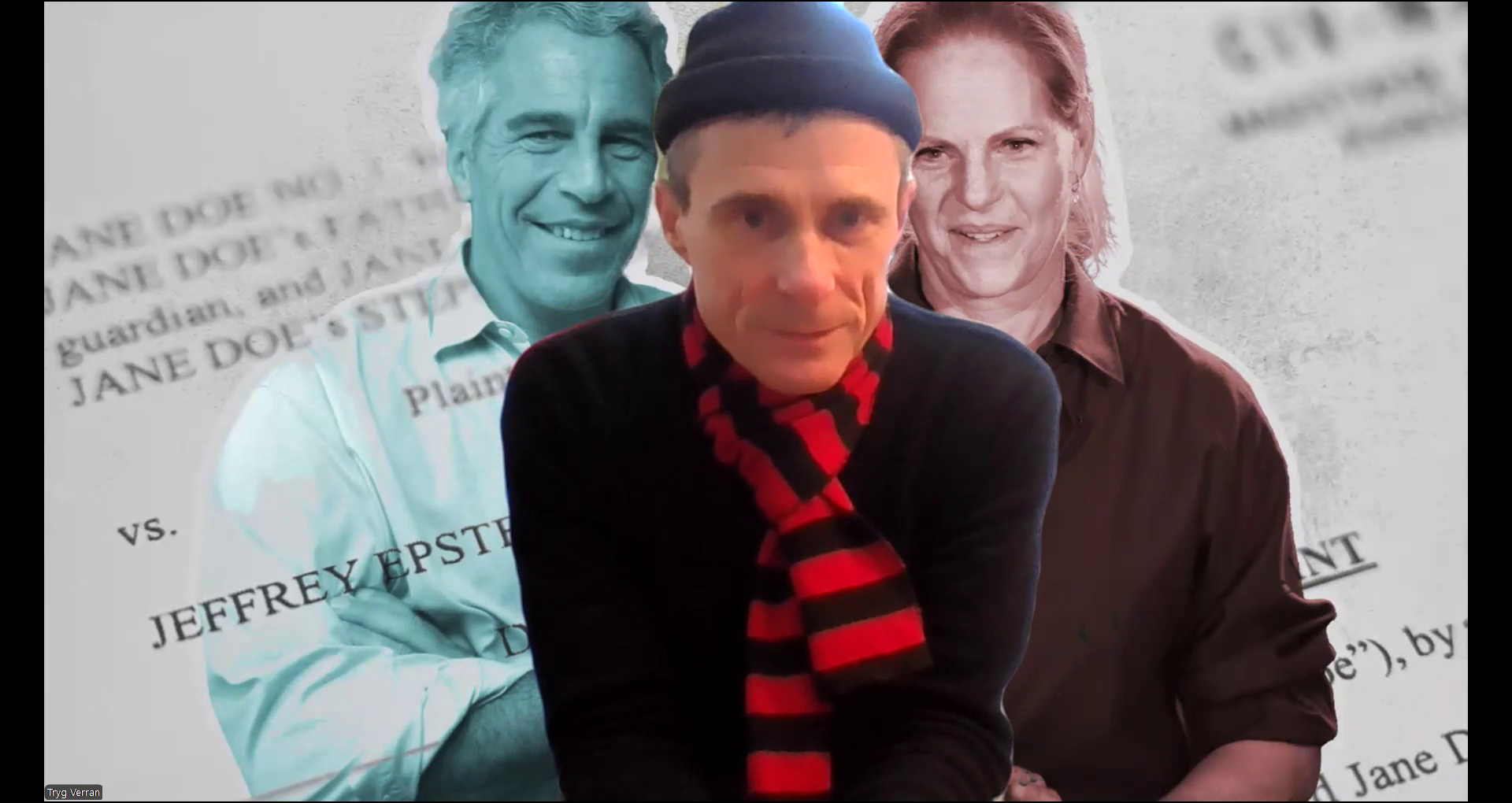
I know. The moment you mention Epstein, half the room switches off and the other half assumes you’re about to spiral into salacious gossip about decadent royals. Fair enough. There’s been no shortage of lurid headlines, often supporting bad faith takes or outright distractions. If you’re involved in grassroots organising – environment, housing, disability rights, local culture – then the Epstein scandal actually matters a great deal. Even here in the Duchy of Cornwall. Especially down here, in fact.

Thanks to Tamedia for the background image.

Not because of the sex crimes themselves, horrific as they are. Without sounding flippant, those are not the important part from an organising perspective. What matters is that the Epstein documents give us a rare, unvarnished look at how power actually functions. Not how it claims to function in glossy brochures, mission statements, or charity galas, but how it works when the doors are closed and the theatre stops.

What emerges is a class of people who genuinely believe themselves to be above the law – not metaphorically, literally. They trade influence across governments, intelligence agencies, banks, weapons manufacturers, and ‘philanthropic’ institutions with astonishing ease. The Epstein network shows us that inter-institutional power doesn’t operate through democratic accountability; it operates through personal relationships, financial leverage, kompromat, and shared class interest.

This is vital for grassroots organisers to understand, because so much organising energy is wasted arguing with the performance of power. We petition the institution, we appeal to its stated values, we take part in consultations that are largely ceremonial. Such processes help cultivate the illusion of participation. Meanwhile, the real decisions are being made elsewhere, by people who will never attend a town hall meeting and who don’t particularly care what the public thinks.

One of the more sobering elements of the Epstein story isn’t just who he knew, but what moved through his world: money laundering, arms flows, political interference, even regime change. Governments toppled, leaders removed, and vast sums legally washed clean through cultural, educational, and environmental organisations. That should ring bells for anyone who’s ever wondered why certain funders always seem to back ‘good causes’ while working-class communities remain neglected.

People are still combing through millions of released emails in the US, but already the outline of empire is visible. The Financial Times article on Epstein’s banking connections is revealing in this regard. When you trace those networks outward, you don’t end up in abstract theory – you end up in very real places. Yes, even Cornwall. Through extractive industries like Imerys, and through respected institutions such as wildlife and cultural trusts. This is what global power looks like when it lands locally.

The same family that profits from extracting Cornwall’s mineral reserves also funds organisations that promote ‘greener’ approaches to resource management, including initiatives linked to the Cornwall Wildlife Trust’s Green Recovery Challenge Fund. This does not, in itself, prove any wrongdoing. However, it does help explain why certain environmental impacts, particularly those linked to mineral extraction, are often absent from official campaigning narratives. This is grassroots theatre in action: the same interests profiting from extraction are also funding the boundaries within which ‘opposition’ is allowed to operate.

To be clear, the Epstein revelations are often discussed through the lens of particular social or cultural networks, but focusing on identity alone misses the point. What is being exposed is not a uniquely Zionist phenomenon, but a familiar pattern of elite, transnational power that has historically operated across Mittel-European, British, German, Italian, and American ruling classes alike. This is simply how imperial power has reproduced itself.

Crucially, the people working at the grassroots level of charitable, cultural, or environmental organisations are not villains. Most have little to no awareness of the legacies of wealth tied to colonial extraction in regions such as Rhodesia, Palestine or Somalia for example. My research suggests these same mechanics operate throughout the provinces, particularly within the overtly feudal ‘Duchy’ of Cornwall.

This is why outlets like the TrueAnon podcast and The Grayzone matter. They’ve been doing the unglamorous work of tracing these connections through a historical materialist lens, rather than dismissing them as scandal or conspiracy. They remind us that power has a history, a geography, and a balance sheet.

If grassroots organising is going to be effective, it has to be grounded in reality – not the comforting story we’re told about how the world works, but the uncomfortable truth of how it often does. The Epstein scandal isn’t a distraction from local issues. It’s a brutal lesson in why local struggles are always connected to global systems of power.

As always, my a’th kar!

I discuss this blog in more depth over on YouTube:

References:

(1) Cornwall Wildlife Trust (n.d.) Green Recovery Challenge Fund: Past projects. Available at: https://www.cornwallwildlifetrust.org.uk/what-we-do/past-projects/green-recovery-challenge-fund (Accessed: 9 February 2026).

(2) Financial Times (n.d.) Jeffrey Epstein and the banking system. Financial Times. Available at: https://www.ft.com/content/0d70b7d3-063d-43a0-812b-8b8b3e7c4c47 (Accessed: 9 February 2026).

(3) Imerys (n.d.) Imerys in the United Kingdom: Cornwall operations. Imerys. Available at: https://www.imerys.com/united-kingdom/cornwall (Accessed: 9 February 2026).

(4) Tages-Anzeiger. (2026). Tamedia AG. [online] Available at: https://www.tagesanzeiger.ch/epstein-beriet-ariane-de-rothschild-475024135092 [Accessed 14 Feb. 2026].

(5)  @TrueAnonPod  Truanon (n.d.) Truanon podcast. Available at: https://soundcloud.com/truanonpod (Accessed: 9 February 2026).

(6)  @thegrayzone7996  The Grayzone (n.d.) Discussion on the Epstein files and imperial power structures. YouTube. Available at: https://www.youtube.com/watch?v=r2wz4rGGRGA&t=8s

Mesotopia: Towards a Politics of Partial Revelation

One of the quietly awkward things about Object-Oriented Ontology (OOO) is watching very clever people try to prise a politics out of it without breaking the crockery. Graham Harman tends to sidestep the issue, while Timothy Morton leans into it with a kind of earnest bravado. Morton’s move toward ecognosticism, and the attempt to locate this within a Marxist framework in texts like Humankind, is genuinely interesting. However, it also feels slightly misaligned. Classic Marxism is grounded in class analysis, historically specific struggles, and the evaluation of material and economic exploitation. OOO, by contrast, flattens the ontological field. Everything withdraws. Everything is weird. The risk is that a politics emerging from OOO may be interpreted less as a material project and more as a kind of nihilistic mood that risks favouring apathy over engagement.

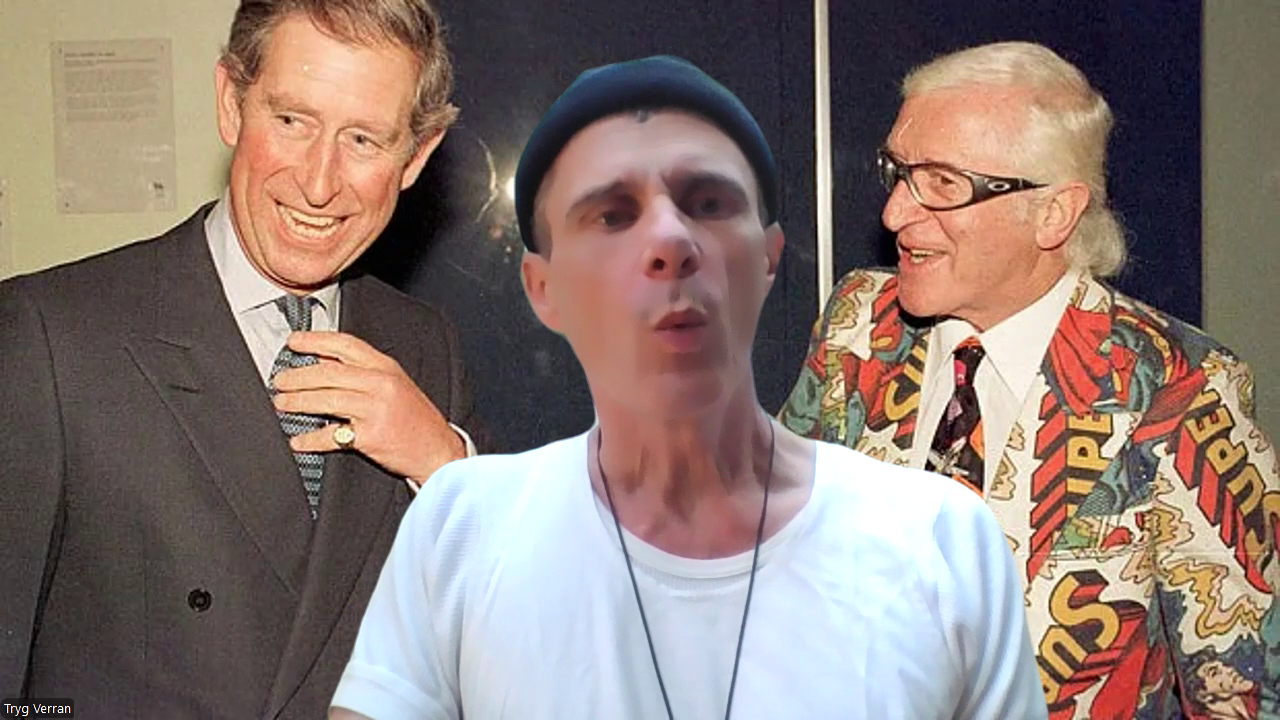
The former Duke of Cornwall with his long-time friend and confidant ‘James’.

I explore this tension more fully in my thesis, Mesotopia: Towards a place of lyrical inquiry, but the short version is this: I admire the effort to push OOO into the political sphere, even when I don’t think it quite lands – and that misfiring is instructive, because it reveals something important about knowledge itself.

While researching the mechanics of mesotopian meaning-making, it became increasingly obvious to me that all research, no matter how rigorous, eventually arrives at a moment of pure conjecture. There is always a moment where the evidence runs out and interpretation takes over. Mesotopia names this space. I live here. We all do, whether we admit it or not. It is a state of partial revelation.

This is not as exotic as it sounds. In fact, it has deep resonances with classic Marxism and even elements of Maoism, where political life is understood to be structurally occluded. Much is withheld – not necessarily because it is illegal, but because it would be politically embarrassing, destabilising, or simply inconvenient if widely known. The very existence of scandals that sit at the periphery of respectable political discourse – such as Operation Gladio or Jeffrey Epstein – points to this condition. Power does not announce itself clearly. Decisions are made elsewhere, in rooms you and I, dear reader, are not invited into, using codes and languages we have not been taught to speak.

My own experiences of working at the fringes of empire have only reinforced my thinking here. I do not know the truth of political machinations at the highest level, but I do know, with absolute certainty, that the general public does not know everything either. This isn’t paranoia. It isn’t fear. It’s political realism.

Often in my research, I return to old-fashioned historical materialist strategies – following flows of money, mapping institutional relationships, noting who funds whom and why. These methods can clarify motivations and alliances that otherwise seem baffling. However, they do not constitute conclusive proof of wrongdoing. Many financial arrangements are perfectly legal. They are simply hidden because they don’t look good under fluorescent light.

This is why I’ve found Erik Davis’s approach in High Weirdness so refreshing. Davis manages to acknowledge the unknown, the speculative, and the unresolved without sliding into mockery or credulity. He takes uncertainty seriously.

I encountered something similar while researching the Cornish language. I plotted the publishing output of writers who have subtly pushed narratives of Baltic and Celtic nationalisms and arrived at a moment of conjecture – why are they doing this? I also didn’t understand why certain groups of people attended some Celtic language meetings. I still don’t. I will never know the inner motives of esoteric groups. Mesotopia teaches me to live with that – not as resignation, but as orientation. Not knowing is not a failure. It is the condition of political life. However, this does not mean that we simply accept ‘not knowing’ as a reason for ‘not doing’. On the contrary, I suggest that a politics of partial revelation encourages us to continue to participate in a project to attend to our local environments even though we cannot possibly know everything.

I can state what I know and intuit what I don’t.

From my research, I observe that industrialists, financiers, and right-wing factions often push nationalist narratives to appeal to the sensibilities of certain minority groups. For what ultimate reason, I cannot know; my intuition, however, is to remain sceptical of their intentions. Partial revelation is the rule, not the exception, and politics begins not with certainty, but with the refusal to be paralysed by its absence.

As always, my a’th kar!

You can follow this link for a video discussion of this blog:

References:
(1) Davis, Erik. (2019). High Weirdness: Drugs, Esoterica, and Visionary Experience in The Seventies. The MIT Press.
(2) Harman, Graham. (2016). Immaterialism: Objects and Social Theory. Polity.
(3) Morton, Timothy. (2017). Humankind: Solidarity with Non-human People. Verso.
(4) Verran, Tristan. (2025). Mesotopia: Towards a Place of Lyrical Inquiry. The University of Plymouth. https://pearl.plymouth.ac.uk/ada-theses/113/

Demystifying The Kernewek Language

I have argued in Mesotopia: Towards a Place of Lyrical Inquiry (1) that yes, there is a real world, but no, it does not open itself to our complete comprehension. We are always half-in, half-out of its meanings, fumbling toward the real but never quite gripping it. This weird middle place – a mesh of physical and conceptual terrains – is the domain of the meaning-makers. The poets, the oracles, the interpreters of signs have historically been quite happy to hide their operations behind opulent rituals or clever distractions. But does it have to be this way? My lyrical work has long been an effort to demystify poetics and language, to free these communicative events from the dictates of esoteric schools and elite fraternities who still treat language as a proprietary ritual.

Naming, after all, has long been the preserve of priestly classes: the magi, the monks, the keepers of alphabets and incantations. In many religious orders, “the Word” is not just a tool but a cosmological foundation – articulation itself becomes sacrament. And once you take this seriously, it becomes impossible not to notice how incantations, chants, spells, prophetic mutterings and other religious-poetic forms lean heavily on the idea of language as conduit to hidden truths. This is the vatic, the mantic, the magical dimension of poesis, the belief that words do not merely describe the world but summon, shape, or invoke it.

Modern linguistics attempts to scrub all this clean. Structuralists, post-structuralists, cognitive scientists, psycholinguists; they all gather with laboratory-grade detachment to “demystify” language production. This is good in theory. But if you ignore the presence of mystery altogether, you’re not demystifying anything. You’re merely tucking your priestly robes into your slacks and hoping nobody notices the ancient hems. Many materialist linguists strike me as devout priestly magi decked out in secular boardroom drag. Here’s one of the many unspoken secrets of our supposedly rational institutions: even empirical research often rests on vast scaffolds of speculation. Each irrefutable graph serves as an article of faith – it’s an ‘educated guess’ berobed as a principle.

This is why it is difficult to determine how many theoretical schools are engaged in re-mystifying the archive of human knowledge – although some hide in plain sight. Even Tim Morton, spear-heading investigations into the ecological implications of object-oriented ontology, is overt about (eco)gnostic leanings.

Consider the accelerationists (2): the former CCRU crowd who hallucinated Deleuze and Guattari into a cybernetic fever dream, pushing symbolism to liturgical extremes. Their rapid decoupling of meaning from symbol, in pursuit of some machinic singularity, often sounds to me not unlike kabbalistic numerology or ecstatic glossolalia. It is not insignificant that many modern tech-titans are devotees of Nick Land. Listen to the quasi-prophetic ramblings of Peter Thiel or Marc Andreessen as they speak of merging symbolic and material terrains; you will hear the cadences of a neo-cult, not a scientific proposal. Meanwhile, various deciples of the structuralists continue to worship The Corpus Linguistic with devotional intensity. ‘and the Word was God,’ they seem to say – and seemingly never notice they are mimicking devotees of Thoth, Hermes or even John 1:1 .Once again, the priests return, this time wearing the unbuttoned casuals of liberal intelligentsia.

In contrast, I often return to etymology, a much subtler way of demystifying meaning. Not by banishing mystery, but by acknowledging its layers. English gives the game away easily: most of our “proper” vocabulary is padded with Greek and Latin. The professional-managerial classes (PMC) learn just enough of these roots to keep the bloated machinery of liberal institutions functioning. Autobiography: self-life-writing. Philosophy: love-of-wisdom. Nothing mystical, only inherited structure.

When we apply the same etymological pressure to Kernewek, interesting stories surface. Pysk, the Kernewek word for “fish,” appears to descend from Latin piscis. This aligns with what Celtic linguists tell us: the Brythonic languages had more prolonged contact with Roman, Norman, and Saxon cultures than their Goidelic cousins. History leaves fingerprints on phonemes.

Or – and here’s a mischievous alternative – it suggests that one of the more “colourful” characters in the history of Kernewek revivalism simply inserted Latin or Greek terms (along with Welsh and Breton borrowings) to fill lexical gaps. The line between linguistic evolution and linguistic invention is not always tidy.

On page 76 of my thesis, I discuss Linguist Professor Price’s uncompromising position: Cornish is dead, he insists, and modern “revivals” are “partially invented” (Price, 1984: 134). He writes:

“The Old Celtic speech of Cornwall died out two centuries ago. It is still dead, and will evermore remain so… The present century has seen the propagation by a small band of enthusiasts of a type of language that is partially derived from the old Celtic speech of Cornwall, but it is also partially invented… I shall reserve the term Cornish for the genuine language and refer to the modern pseudo-Cornish as Cornic.”

I do have issues with Price’s framing. As I wrote:

“What is involved in inventing a language? What is a pseudo-language? What does a ‘genuine’ or ‘authentic’ Kernewek sound like? I remain confused by the extent to which Price uses terms such as authentic, genuine, and pseudo in relation to Kernewek.” (Verran, 2025: 76)

Whether or not one accepts Price’s verdict, the point stands: Kernewek should be preserved and spoken as a breathing archive of our past, not re-engineered as an esoteric tool of ethnonationalism. We know too well what can happen when fringe political movements revive ancient languages to manufacture legitimacy. And it doesn’t surprise me that Celtic circles frequently attract a plethora of esoteric characters: Zionists, Catholic Religious Orders, Rosicrucians, Masons, New-Age Druids, Shamans or Wiccans – all projecting mystical significance onto minority languages. Why this conviction that certain tongues contain secret indigenous wisdom? Romantic nationalism, folklore, and the Arcadian fantasy of an unbroken Celtic lineage have all fed this impulse.

The more I learn about figures like Iolo Morganwg or Robert Morton Nance – who seem to have consciously cultivated a priestly order of Celtic mystics modelled on Julius Caesar’s accounts of ancient Britons – the more frustrated I become. We don’t need to live inside the art projects of eccentric artists or poets – and yes, that includes me! Trust me, we definitely shouldn’t live inside anything I create.

As a poet, I enjoy bending language into unorthodox shapes. I fabricate littoral places inside my verse, places that shimmer and sometimes misbehave. But I do not belong to the mystery schools of modern priestly classes, who still seem intent on fabricating material realities for entire populations to inhabit according to the whims of neo-feudal aristocrats or digital landlords.

For me, the mystery is not something to eradicate but something to remain in dialogue with. I continue to wrestle with the languages I have inherited. I am consciously rejecting past myths or Arthurian tropes all too often associated with Celtic languages. Through lyrical poetry, I keep listening – probing the metaphysical uncertainties that Kernewek, in all its contested life and afterlife, continues to stir.

As always, my a’th kar!

All References Available From Verran, 2025:

(1) Verran, T. (2025) Mesotopia: Towards a Place of Lyrical Inquiry. Thesis. University of Plymouth. Available at: https://doi.org/10.24382/nv45-pk79

(2) Monoskop.org. (2017). Cybernetic Culture Research Unit – Monoskop. [online] Available at: https://monoskop.org/Cybernetic_Culture_Research_Unit.

Is Cornish Nationalism Part of a Broader Strategy of Tension?

The Cold War term ‘strategy of tension’ precisely describes how a deliberate cultivation of fear, division, and polarisation maintains strict political control over entire populations. Nowhere was that logic more clearly institutionalised than in Operation Gladio, the clandestine stay-behind network exposed in western Europe during the early 1990s. The revelations of Gladio, examined in detail by the European Parliament in 1990 (1) and subsequent Italian parliamentary inquiries, demonstrated that NATO-linked structures funded and trained secret paramilitary cells that engaged in manipulation of political life, propaganda, and acts of terrorism designed to discredit left-wing organisations.

The Gladio inquiries confirmed that such networks were real, coordinated through the Clandestine Planning Committee under NATO auspices, and operated without meaningful democratic oversight (1). The absence of accountability remains instructive: if the alliance could sustain covert political operations for decades throughout western Europe, which included false-flag terror attacks that killed hundreds of citizens, why would anyone, conservative or liberal, not believe that such groups would be capable of carrying out similar operations today?

Furthermore, while researching my thesis I had the feeling that something about the push for Cornish nationalism was off, but I couldn’t quite articulate why I felt like that. Most people I have met who advocate for an independent Cornwall are sincere in their beliefs; however, I detect underlying inconsistencies about what such a nationalist project entails.

When I first read The Last of the Celts (2006) by Marcus Tanner (4), I recall being delighted by its seemingly objective view of Cornish life which resonated with my own politically naïve rural upbringing. It presented the Cornish nationalist movement as well-meaning but misguided in its desire for an independent Cornish nation. The Last of the Celts seemed at odds with Tanner’s earlier work in service of NATO in which he had written of how a cultural revival of Illyrianism and Croatian independence could serve as a vehicle for anti-communist and pro-NATO state projects (5 – 6). As a more conservative commentator, I wondered why he hadn’t presented Cornish independence in a more positive light.

In 2008, Peter Tatchell weighed in with a Guardian article on Cornish devolution which, perhaps unintentionally, fits within Tanner’s Illyrian pattern (7). Framing Cornwall’s cultural revival—its language, economic neglect, and sense of distinctiveness—as grounds for autonomy, Tatchell advanced a civic, human-rights vocabulary of recognition. While ostensibly being anti-NATO, I can’t help noticing that Tatchell often highlights the human rights abuses of NATO’s enemies and therefore subtly re-enforces NATO soft-power.

It is still unclear to me what is meant by the term ‘Cornish Nationalism’. Ask a Cornish nationalist what they mean by Cornish nationalism, and you will get answers that range from the establishment of a homeland for a protected ethnic minority (8), to a collection of qualities that anyone who wishes to can simply adopt. Which is it? Over the course of my research, I have met conservative people who welcome foreign investment to support their status as an ‘ethnic minority’ and left-wing people who don’t want to talk about international class solidarity but would rather work on their spiritual connection to the land. I guess Cornish nationalism is shorthand for a political movement devoid of any principles – it’s essentially whatever you want it to be.

While I cannot prove any Gladio-like covert operation to cultivate this confusion, Cornish nationalism does appear to me to be a convenient way to divert attention away from legitimate critiques of economic disenfranchisement. Such covert operations in the UK are not new. There is plenty of evidence of state infiltration and manipulation of political movements and I encourage readers to follow the ongoing ‘Spycops’ inquiry (9) which documents the shocking lengths to which clandestine state actors will go to infiltrate and manipulate any grass-roots political group vaguely critical of state power.

There are three main reasons why I think Cornish nationalism exhibits qualities akin to a strategy of tension:

1. Fragmentation of Class Solidarity.
In the 1970s and 1980s, Gladio sought to prevent left-wing unity through the creation of internal enemies. Today, the divisions are stoked through the cultivation of increasing ‘identities’. As such, Cornish, Welsh, or Scottish nationalisms re-localise political energy, dividing workers who share economic conditions into segregated cultural blocs.

2. Cultural Channels of Influence.
Where Gladio used paramilitaries, the contemporary state and its allies use funding streams. NATO’s Science for Peace and Security programme, EU cultural grants, and UK regional-resilience projects engage universities, NGOs, and local councils. These initiatives are transparent and lawful, yet they replicate the same institutional geometry: money and legitimacy flowing from transnational power centres into local intermediaries that serve a global neo-liberal politic.

3. Manufactured Instability and Managed Resolution.
A mild level of cultural tension can be politically useful. It sustains the narrative of diversity and democratic pluralism while justifying ongoing engagement by central authorities and security institutions.

Celtic nationalism’s re-emergence within neoliberal Britain functions as both instrument and symptom of capitalist crisis. Deindustrialisation and austerity have hollowed out working-class organisation. Into that void steps cultural revivalism—a politics that offers recognition without redistribution. The Cornish worker, stripped of collective power, finds symbolic compensation in a flag and a revived language.

Antonio Gramsci’s notion of passive revolution is instructive here: the ruling order absorbs elements of popular culture to prevent revolutionary rupture (15). Cornwall’s identity politics, when funded and validated by state and supranational agencies, represents precisely this absorption. It channels anger into manageable narratives of heritage, tourism, and local governance—harmless to capital and convenient to the geopolitical architecture that sustains it.

To invoke Gladio is not to allege bombs beneath Bodmin Moor. It is to recognise that the form of power—its reliance on fragmentation, on fear, on the management of identity—has endured even as its methods have evolved. What has changed is the medium: from covert armies to cultural partnerships, from false-flag violence to discourse management. The strategy of tension has been civilised, bureaucratised, normalised.

Cornish nationalism, like its Celtic counterparts, is sincere, creative, and rooted in genuine grievance. Yet it also illustrates how culture can become an instrument of governance. The historical record of Operation Gladio reveals the capacity of NATO and its affiliates to shape domestic political environments in service of maintaining economic control (10-14). The current celebration of Celtic identity performs a similar ideological function: it fragments working-class unity, redirects discontent into heritage, and sustains the hegemony of the transatlantic order.

As always…

My a’th Kar!

References:

Primary & Institutional Sources

1. European Parliament (1990). Resolution on the Gladio Affair. European Parliament’s 1990 resolution (A3-205/90) Official Journal of the European Communities, C324/201.
— Documents the exposure of clandestine NATO-linked “stay-behind” networks operating in Western Europe during the Cold War.
[Available via European Parliament archives]

2. UK Ministry of Defence. Joint UK–NATO Training Exercises: Annual Reports. (Various years 1995–2023).
— Provides information on joint exercises in South West England, including Cornwall, showing the region’s strategic military role.
[MOD Open Data & Defence Committee reports]

3. Council of Europe (2014). Framework Convention for the Protection of National Minorities: United Kingdom Compliance Report.
— Recognises the Cornish as a national minority, illustrating institutional support for regional cultural identity.


Secondary Literature: Tanner and Cultural Nationalism

4. Tanner, Marcus (2003). The Last of the Celts. Yale University Press.
— Explores cultural revival movements across Celtic regions and their political resonances in the late 20th century.

5. Tanner, Marcus (1997). Croatia: A Nation Forged in War. Yale University Press.
— Examines how cultural and linguistic revival were instrumentalised during post-Soviet transitions in the Balkans.

6. Tanner, Marcus (1990s). Articles for Balkan Insight and related NATO-aligned think tanks.
— Promoted narratives of national self-determination as part of post-Communist democratisation discourse.
[See Balkan Insight archives, c.1995–2001]


Media & Civic Commentary

7. Tatchell, Peter (2008). “Cornwall’s Case for Self-Government.” The Guardian.
— Argues for devolved governance and recognition of Cornish cultural identity within a human-rights framework.
[Available on The Guardian archive]

8. BBC News (2014). “Cornish People Granted Minority Status within the UK.”
— Confirms the official policy shift recognising Cornish distinctiveness.

9. Ongoing ‘Spycops’ Case. (n.d.) Undercover Policing Inquiry: Official Website. [online] Available at: https://www.ucpi.org.uk/


Academic and Analytical Works on NATO and the ‘Strategy of Tension’ 

10. Ganser, Daniele (2005). NATO’s Secret Armies: Operation Gladio and Terrorism in Western Europe. Frank Cass Publishers.
— Scholarly investigation into the historical structure of Gladio and its use of controlled instability for political effect.

11. Kaldor, Mary (2006). New and Old Wars: Organised Violence in a Global Era. Polity Press.
— Analyses how modern warfare and alliances use identity politics to maintain control in post-industrial societies.

12. Harvey, David (2005). A Brief History of Neoliberalism. Oxford University Press.
— Provides the Marxist foundation for understanding how decentralised nationalism can serve to fragment the working class under neoliberal regimes.

13. Anderson, Benedict (1983). Imagined Communities. Verso.
— Foundational text on how national identities are culturally constructed and politically mobilised.

14. Monaghan, Andrew (2017). Power in Modern Europe: NATO, EU and Russia. Manchester University Press.
— Discusses NATO’s post–Cold War soft power strategy and civil-society engagement mechanisms.


Theoretical & Marxist Context

15. Gramsci, Antonio (1971). Selections from the Prison Notebooks. Lawrence & Wishart.
— Introduces the concept of cultural hegemony, crucial for understanding NATO’s ideological influence.

16. Hobsbawm, Eric & Ranger, Terence (eds.) (1983). The Invention of Tradition. Cambridge University Press.
— Explores how cultural symbols are consciously re-engineered to serve political ends.