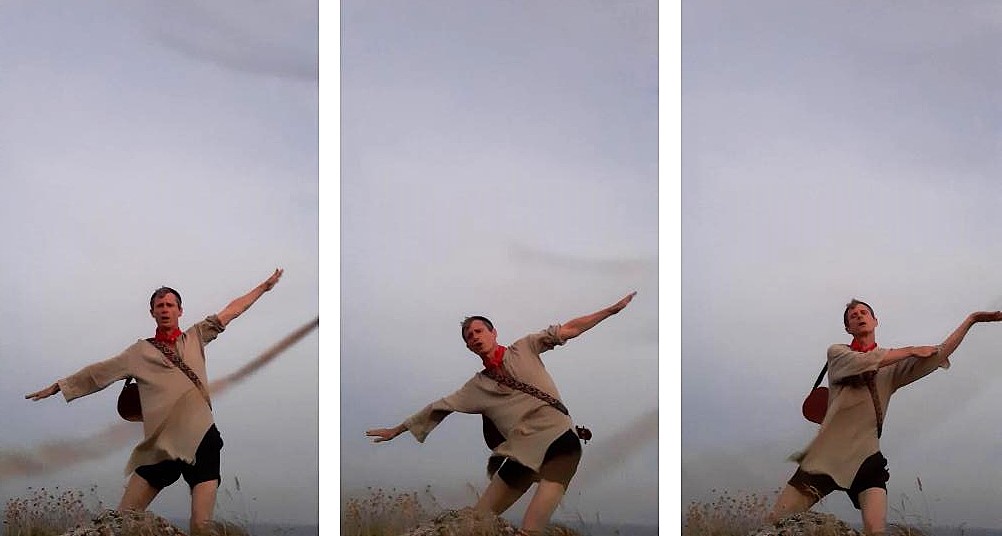
Is Tommy Poppers Real?

Since 2010, I’ve been experimenting with how to be a writer on the internet. I’ve made blogs, stories, anonymous profiles and strange hybrids that lived somewhere between art and autobiography. Some of these experiments worked; others fell flat or disappeared into the algorithmic abyss. But across these fifteen years of testing the limits of online identity, one question keeps returning to me: is Tommy Poppers real?

The short answer is yes—and no.
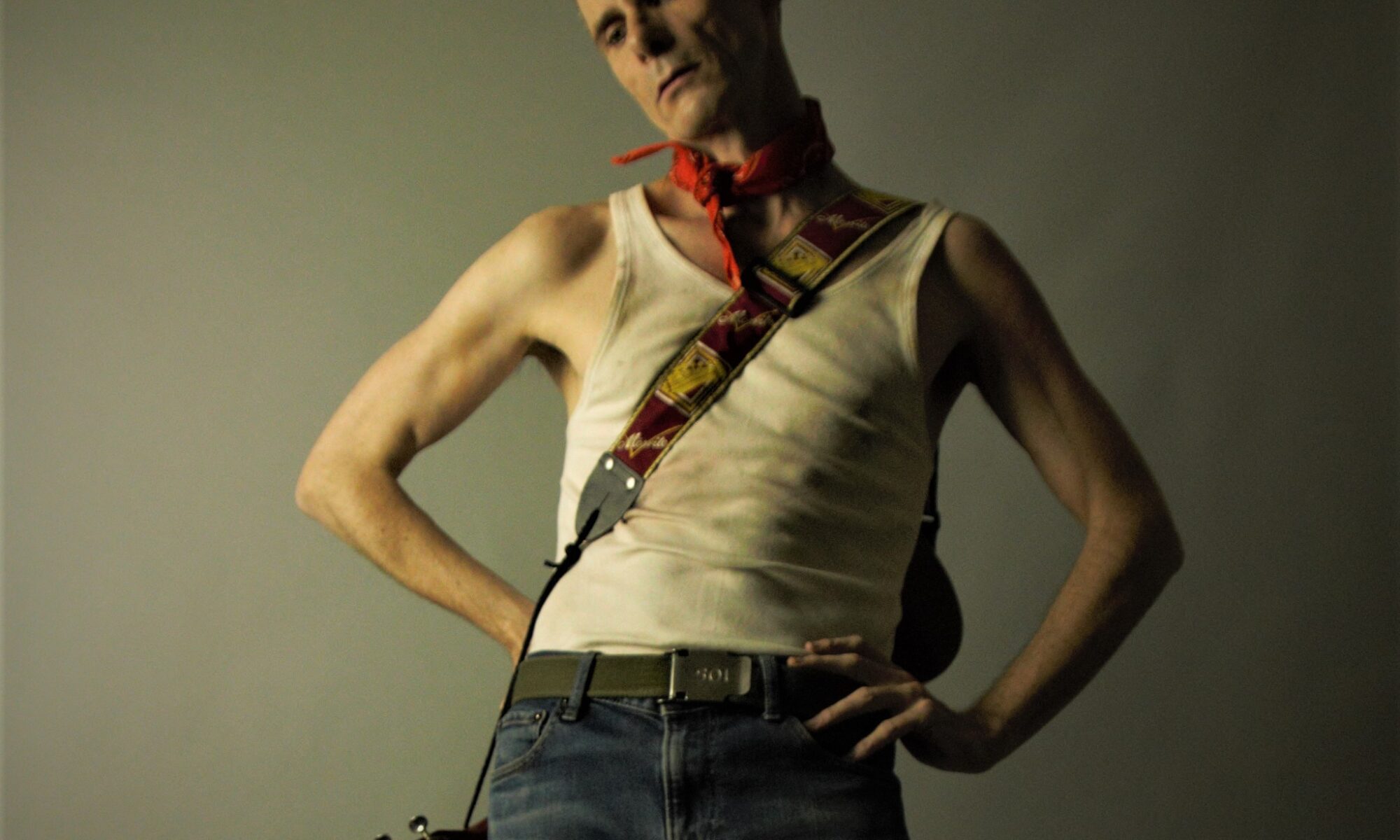
Tommy Poppers exists. He writes, he posts, he provokes. He’s had conversations with real people. He’s been misread, adored, and blocked. But he isn’t real in the metaphysical sense. There is no withheld essence to Tommy Poppers that could exist independently of me. He’s not sitting in some digital backroom waiting to log on. He is a performance, an appearance—a sensual object projected into a particular medium at a particular time.

This troubles Graham Harman’s notion that every object, whether material or immaterial, has an autonomous essence—something withdrawn, beyond all relation. I simply don’t see that in Tommy. He only flickers into being when someone reads, reacts, or misinterprets him. He’s not withdrawn but relational; not autonomous but dependent. He depends on my creative act and the network that sustains him. When the internet is turned off forever, this version of Tommy vanishes into the ether. Perhaps a version of Tommy would continue to compose and sing to people in ‘real’ life, but this would still be a projection of the ‘real’ me. After a performance, the sailor hat would be returned to the box, and I would concern myself with other things.

What’s more unsettling is how these digital experiments have rippled offline. Over the years, I’ve seen people respond to my avatars as if they were separate beings—proof, perhaps, that our culture has quietly accepted digital personas as real. Yet what these encounters reveal, to me at least, is that the internet exists—but it isn’t real. It’s a sensual distraction, an elaborate mirage designed to sustain the illusion of technocratic supremacy. It convinces us that the symbolic realm—the feeds, the data, the curated self—is somehow more meaningful than embodied life.

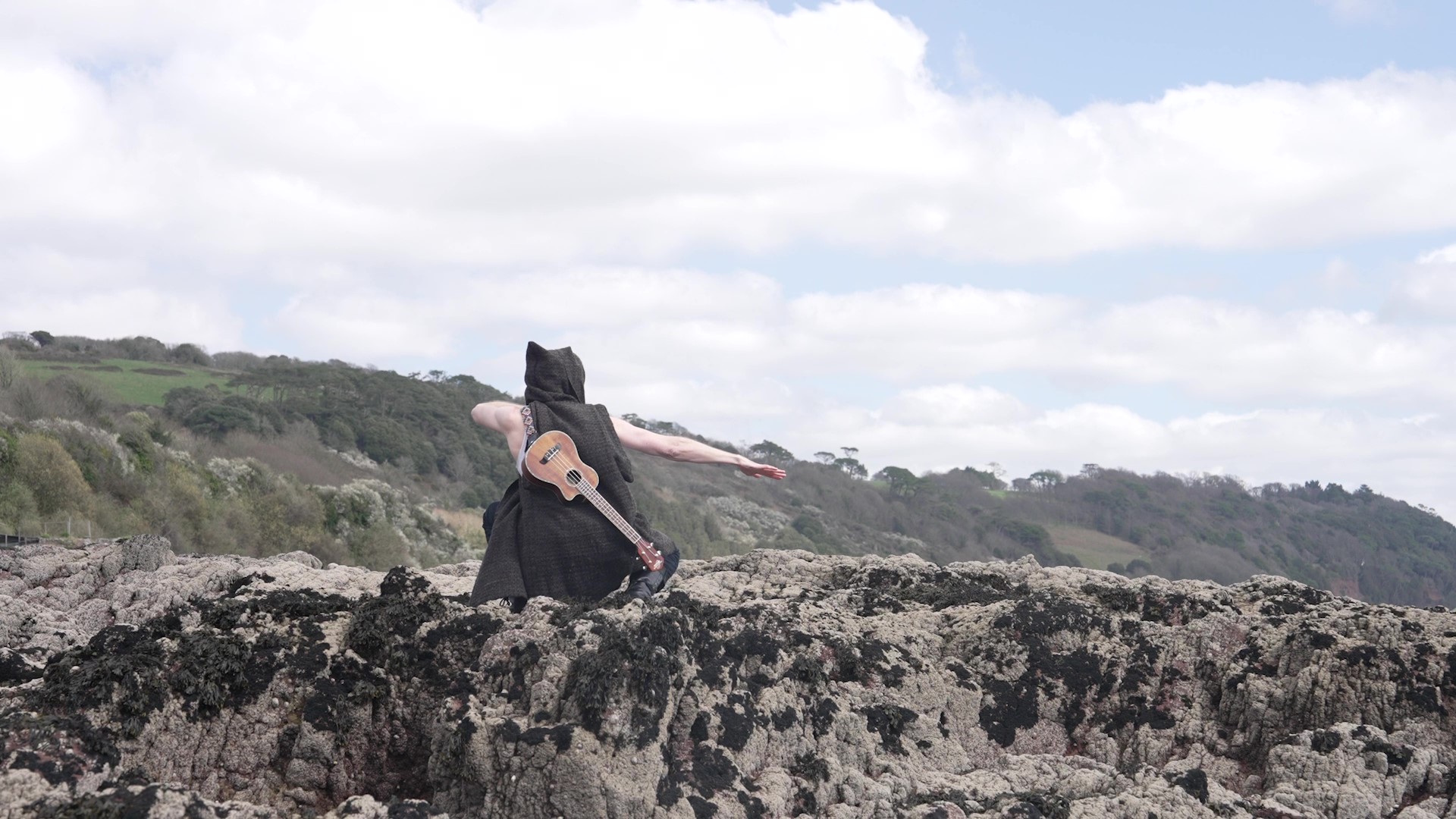
To clarify: yes, Tommy Poppers exists. So does an bardh wyls, and so, for that matter, do I—Tryg. These are not “characters” in the fictional sense. They are working avatars, conceptual tools I use to explore difficult themes. Tommy helps me confront the performance of masculinity and the shadow of male violence. An bardh wyls, “the wild poet,” emerges when I write through the lyric’s relationship to place about environmental decadence and grief. Both are masks, but masks that reveal as much as they conceal.

I never post everything about where I am or who I’m with. That’s deliberate. It’s not secrecy—it’s philosophy. The digital realm cannot contain the totality of human existence. It can gesture, distort, amplify—but it cannot hold.

Offline, my life is grounded. I work with people I respect, in situations that demand attentiveness and care. Those relationships are real. They’re not content. I would never diminish them by performing them online.

So, is Tommy Poppers real? He’s as real as any reflection, as any poem, as any name you’ve ever written down and then outgrown. He is the shimmer of the self meeting its medium—a reminder that being online is not being alive.
Introducing The Psy-omatics of Encounter

In my earlier writing on Mesotopia: Towards a Place of Lyrical Inquiry, I proposed that meaning doesn’t live in the mind or the world alone, but somewhere between — in the mesotopic zone where bodies, environments, and language meet. The mesotopia is not a fixed place but a field of relation: a shifting terrain in which the real and the unreal, the felt and the thought, co-emerge through the act of encounter. This is not the materialist view that there is a “real world” out there waiting to be known, nor is it a purely idealist stance that the world is just a projection of the mind. The mesotopian perspective holds that the world is real, but it can never be fully known — only felt, intuited, translated and partially expressed through our sensory and linguistic entanglements with it.

This brings me to what I call the Psy-omatics of Encounter. By this I mean the subtle interplay between psyche and soma — mind and body — in the process of making meaning from environmental experience. Every encounter, whether with a tree, a breeze, or a city street, is not simply registered by the senses but interpreted by the nervous system, the emotions, and the imagination. These layers overlap and modulate one another in complex ways. The body registers vibrations and textures; the psyche weaves these into narratives, memories, and associations. Meaning, in this sense, is a psycho-somatic improvisation — an event that unfolds in the middle space between our physiological being and the environment’s affective impositions.

This is where I locate the process of lyrical production. My process of lyrical poesis emerges from these embodied encounters. Rather than treating poetry as a form of representation, I use it as a method of inquiry — a way to stay with the textures of experience before they are translated into fixed categories. Through this practice, I explore how different languages orient us differently toward the environment. Some languages, for example, frame the nonhuman world as animated and relational; others cast it as a passive backdrop for human action. By writing through and with these differences, I seek to expose the underlying psychic and bodily rhythms that shape our sense of environmental being.

It is crucial to emphasise that these encounters are localised events. They happen in the specificity of place — this humidity, this soundscape, this particular alignment of body and weather. Yet our minds often intervene, filtering these sensations through anthropocentric schemas. We name, measure, and categorise what we meet. This filtering process makes the world intelligible, but it also diminishes its strangeness. It reduces the real weirdness of environmental being — the sense that the world exceeds our concepts, that it vibrates with meanings we cannot fully articulate.

For this reason, I argue that intuition remains fundamental to any inquiry into the environment. Intuition is not anti-intellectual; it is the body’s capacity to sense patterns before they crystallise into thought. It is how we orient ourselves toward the more-than-human field of existence. Much of what we call environmental knowledge, from early cosmologies to modern ecological insight, has emerged from this intuitive mode of knowing. The Psy-omatics of Encounter, then, is not just a theory — it is an invitation to feel-think our way into the world again, to rediscover the lyrical intelligence that has always connected psyche, soma, and earth.

As always, my a’th kar!

Here is a link to my thesis which features a more detailed description of my work:

https://pearl.plymouth.ac.uk/ada-theses/113/


Introducing The Mesotopia: Living Between Physical and Symbolic Worlds

I often begin by saying that my approach to meaning-making differs sharply from the purely materialist assumption that ‘there is a real world and it can be known’. The mesotopian position, by contrast, begins from the more unsettling but, I think, more honest claim: there is a real world, but it can never be completely known. This is not a retreat into relativism or mysticism; indeed, I argue for demystifying the process of meaning-making. I advance a philosophy of embodied recognition that every act of knowing is situated, partial, and mediated through the strange vehicle of human experience.

In the mesotopia, meaning arises not from the fixed solidity of matter, nor from the abstract play of language, but in the dynamic, lived zone where sensing, thinking, and doing meet. The prefix meso- means “middle,” and it’s in this middle terrain that I locate philosophy as a practice, not as a system. It’s a space of tension, friction, and constant negotiation—where perception and intuition interweave to produce what we take to be “the real.”

Materialism offers the comfort of certainty: a belief that, if we look hard enough, we can strip away illusion and stand before reality as it truly is. The mesotopian approach rejects that fantasy. Instead, it invites us to dwell in partial revelation—to see knowledge as a series of embodied engagements that illuminate fragments of the world while inevitably casting others into shadow. What we call “understanding” is not the conquest of the unknown, but a dance with its irreducible strangeness.

This is where the idea of weirdness enters. In my work, weirdness isn’t about the quirky or bizarre, but about that unsettling quality that appears when reality refuses to be fully domesticated by human thought or desire. The weird announces itself when our conceptual frameworks falter—when the world shows itself to be more alive, more complex, more surprising than our categories allow. Weirdness, then, is not an obstacle to meaning but the sign of meaning’s vitality. It’s the pulse that reminds us we are both active and passive participants in a strange confederation of things that keep their secrets.

In the mesotopia, to encounter weirdness is to encounter reality itself. Our bodies, our gestures, our creative acts—these are not secondary to thought but integral to it. The way we move, speak, and make art are all ways of negotiating that strange boundary between what can be known and what forever escapes categorisation. Philosophy, in this sense, becomes an art of attunement—a way of staying sensitive to the rhythms of a world that exceeds our grasp.

So the mesotopian project is neither to master the real nor to deny it. It is to inhabit it—to live in that fertile middle space where knowledge and mystery coexist, where the world’s weirdness is not a problem to solve but a companion to think with. To be mesotopian is to make meaning a bodily act, to feel thought as movement, and to accept, joyfully, that the real will always remain just beyond the horizon of what we can name.

As always, my a’th kar.

x

A link to an informal vlog discussing this blog can be found here:

A link to my recent thesis in The University of Plymouth’s archives can be found here:

https://pearl.plymouth.ac.uk/ada-theses/113/