
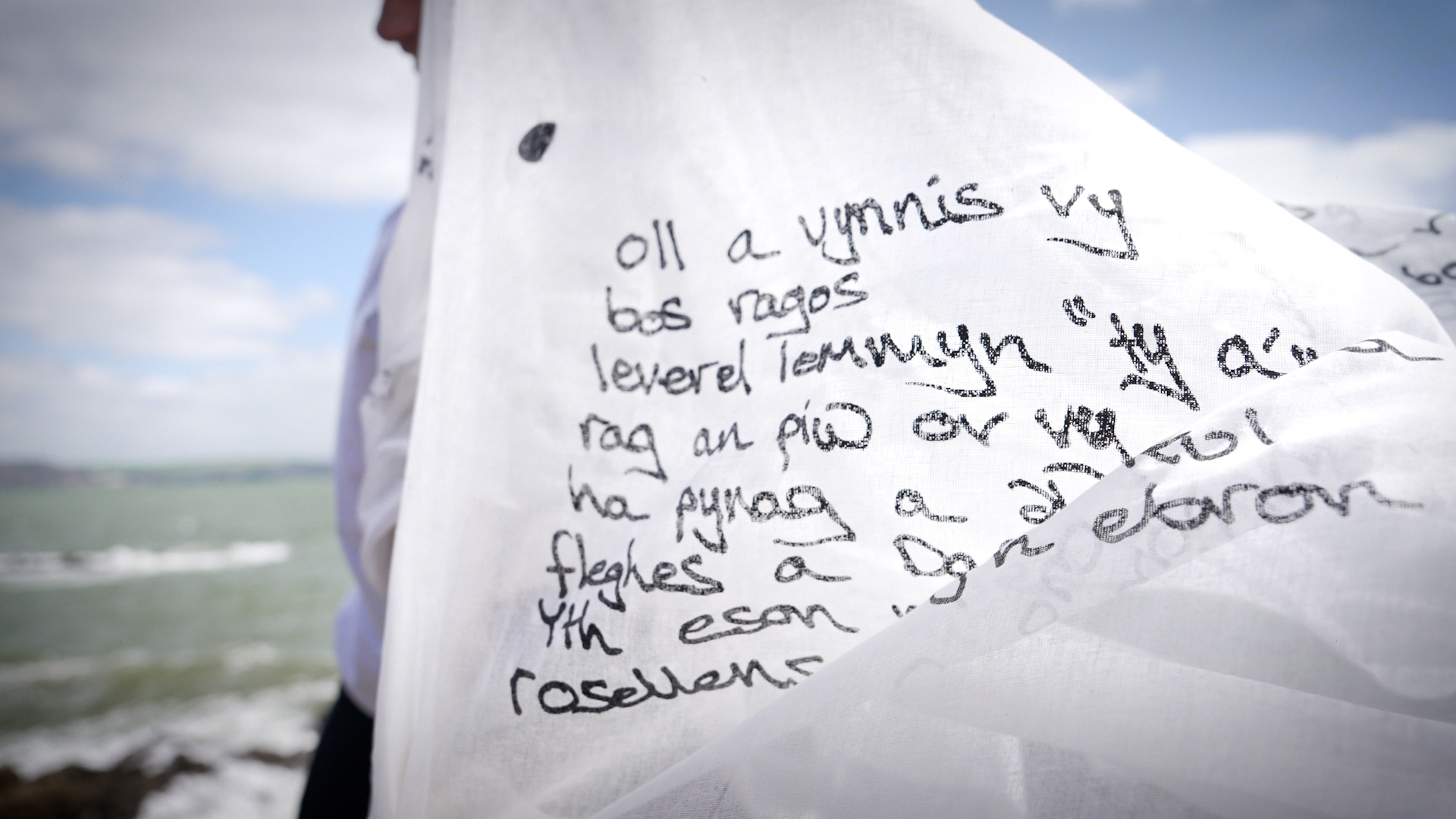
The Cold War term ‘strategy of tension’ precisely describes how a deliberate cultivation of fear, division, and polarisation maintains strict political control over entire populations. Nowhere was that logic more clearly institutionalised than in Operation Gladio, the clandestine stay-behind network exposed in western Europe during the early 1990s. The revelations of Gladio, examined in detail by the European Parliament in 1990 (1) and subsequent Italian parliamentary inquiries, demonstrated that NATO-linked structures funded and trained secret paramilitary cells that engaged in manipulation of political life, propaganda, and acts of terrorism designed to discredit left-wing organisations.
The Gladio inquiries confirmed that such networks were real, coordinated through the Clandestine Planning Committee under NATO auspices, and operated without meaningful democratic oversight (1). The absence of accountability remains instructive: if the alliance could sustain covert political operations for decades throughout western Europe, which included false-flag terror attacks that killed hundreds of citizens, why would anyone, conservative or liberal, not believe that such groups would be capable of carrying out similar operations today?
Furthermore, while researching my thesis I had the feeling that something about the push for Cornish nationalism was off, but I couldn’t quite articulate why I felt like that. Most people I have met who advocate for an independent Cornwall are sincere in their beliefs; however, I detect underlying inconsistencies about what such a nationalist project entails.
When I first read The Last of the Celts (2006) by Marcus Tanner (4), I recall being delighted by its seemingly objective view of Cornish life which resonated with my own politically naïve rural upbringing. It presented the Cornish nationalist movement as well-meaning but misguided in its desire for an independent Cornish nation. The Last of the Celts seemed at odds with Tanner’s earlier work in service of NATO in which he had written of how a cultural revival of Illyrianism and Croatian independence could serve as a vehicle for anti-communist and pro-NATO state projects (5 – 6). As a more conservative commentator, I wondered why he hadn’t presented Cornish independence in a more positive light.
In 2008, Peter Tatchell weighed in with a Guardian article on Cornish devolution which, perhaps unintentionally, fits within Tanner’s Illyrian pattern (7). Framing Cornwall’s cultural revival—its language, economic neglect, and sense of distinctiveness—as grounds for autonomy, Tatchell advanced a civic, human-rights vocabulary of recognition. While ostensibly being anti-NATO, I can’t help noticing that Tatchell often highlights the human rights abuses of NATO’s enemies and therefore subtly re-enforces NATO soft-power.
It is still unclear to me what is meant by the term ‘Cornish Nationalism’. Ask a Cornish nationalist what they mean by Cornish nationalism, and you will get answers that range from the establishment of a homeland for a protected ethnic minority (8), to a collection of qualities that anyone who wishes to can simply adopt. Which is it? Over the course of my research, I have met conservative people who welcome foreign investment to support their status as an ‘ethnic minority’ and left-wing people who don’t want to talk about international class solidarity but would rather work on their spiritual connection to the land. I guess Cornish nationalism is shorthand for a political movement devoid of any principles – it’s essentially whatever you want it to be.
While I cannot prove any Gladio-like covert operation to cultivate this confusion, Cornish nationalism does appear to me to be a convenient way to divert attention away from legitimate critiques of economic disenfranchisement. Such covert operations in the UK are not new. There is plenty of evidence of state infiltration and manipulation of political movements and I encourage readers to follow the ongoing ‘Spycops’ inquiry (9) which documents the shocking lengths to which clandestine state actors will go to infiltrate and manipulate any grass-roots political group vaguely critical of state power.
There are three main reasons why I think Cornish nationalism exhibits qualities akin to a strategy of tension:
1. Fragmentation of Class Solidarity.
In the 1970s and 1980s, Gladio sought to prevent left-wing unity through the creation of internal enemies. Today, the divisions are stoked through the cultivation of increasing ‘identities’. As such, Cornish, Welsh, or Scottish nationalisms re-localise political energy, dividing workers who share economic conditions into segregated cultural blocs.
2. Cultural Channels of Influence.
Where Gladio used paramilitaries, the contemporary state and its allies use funding streams. NATO’s Science for Peace and Security programme, EU cultural grants, and UK regional-resilience projects engage universities, NGOs, and local councils. These initiatives are transparent and lawful, yet they replicate the same institutional geometry: money and legitimacy flowing from transnational power centres into local intermediaries that serve a global neo-liberal politic.
3. Manufactured Instability and Managed Resolution.
A mild level of cultural tension can be politically useful. It sustains the narrative of diversity and democratic pluralism while justifying ongoing engagement by central authorities and security institutions.
Celtic nationalism’s re-emergence within neoliberal Britain functions as both instrument and symptom of capitalist crisis. Deindustrialisation and austerity have hollowed out working-class organisation. Into that void steps cultural revivalism—a politics that offers recognition without redistribution. The Cornish worker, stripped of collective power, finds symbolic compensation in a flag and a revived language.
Antonio Gramsci’s notion of passive revolution is instructive here: the ruling order absorbs elements of popular culture to prevent revolutionary rupture (15). Cornwall’s identity politics, when funded and validated by state and supranational agencies, represents precisely this absorption. It channels anger into manageable narratives of heritage, tourism, and local governance—harmless to capital and convenient to the geopolitical architecture that sustains it.
To invoke Gladio is not to allege bombs beneath Bodmin Moor. It is to recognise that the form of power—its reliance on fragmentation, on fear, on the management of identity—has endured even as its methods have evolved. What has changed is the medium: from covert armies to cultural partnerships, from false-flag violence to discourse management. The strategy of tension has been civilised, bureaucratised, normalised.
Cornish nationalism, like its Celtic counterparts, is sincere, creative, and rooted in genuine grievance. Yet it also illustrates how culture can become an instrument of governance. The historical record of Operation Gladio reveals the capacity of NATO and its affiliates to shape domestic political environments in service of maintaining economic control (10-14). The current celebration of Celtic identity performs a similar ideological function: it fragments working-class unity, redirects discontent into heritage, and sustains the hegemony of the transatlantic order.
As always…
My a’th Kar!
References:
Primary & Institutional Sources
1. European Parliament (1990). Resolution on the Gladio Affair. European Parliament’s 1990 resolution (A3-205/90) Official Journal of the European Communities, C324/201.
— Documents the exposure of clandestine NATO-linked “stay-behind” networks operating in Western Europe during the Cold War.
[Available via European Parliament archives]
2. UK Ministry of Defence. Joint UK–NATO Training Exercises: Annual Reports. (Various years 1995–2023).
— Provides information on joint exercises in South West England, including Cornwall, showing the region’s strategic military role.
[MOD Open Data & Defence Committee reports]
3. Council of Europe (2014). Framework Convention for the Protection of National Minorities: United Kingdom Compliance Report.
— Recognises the Cornish as a national minority, illustrating institutional support for regional cultural identity.
Secondary Literature: Tanner and Cultural Nationalism
4. Tanner, Marcus (2003). The Last of the Celts. Yale University Press.
— Explores cultural revival movements across Celtic regions and their political resonances in the late 20th century.
5. Tanner, Marcus (1997). Croatia: A Nation Forged in War. Yale University Press.
— Examines how cultural and linguistic revival were instrumentalised during post-Soviet transitions in the Balkans.
6. Tanner, Marcus (1990s). Articles for Balkan Insight and related NATO-aligned think tanks.
— Promoted narratives of national self-determination as part of post-Communist democratisation discourse.
[See Balkan Insight archives, c.1995–2001]
Media & Civic Commentary
7. Tatchell, Peter (2008). “Cornwall’s Case for Self-Government.” The Guardian.
— Argues for devolved governance and recognition of Cornish cultural identity within a human-rights framework.
[Available on The Guardian archive]
8. BBC News (2014). “Cornish People Granted Minority Status within the UK.”
— Confirms the official policy shift recognising Cornish distinctiveness.
9. Ongoing ‘Spycops’ Case. (n.d.) Undercover Policing Inquiry: Official Website. [online] Available at: https://www.ucpi.org.uk/
Academic and Analytical Works on NATO and the ‘Strategy of Tension’
10. Ganser, Daniele (2005). NATO’s Secret Armies: Operation Gladio and Terrorism in Western Europe. Frank Cass Publishers.
— Scholarly investigation into the historical structure of Gladio and its use of controlled instability for political effect.
11. Kaldor, Mary (2006). New and Old Wars: Organised Violence in a Global Era. Polity Press.
— Analyses how modern warfare and alliances use identity politics to maintain control in post-industrial societies.
12. Harvey, David (2005). A Brief History of Neoliberalism. Oxford University Press.
— Provides the Marxist foundation for understanding how decentralised nationalism can serve to fragment the working class under neoliberal regimes.
13. Anderson, Benedict (1983). Imagined Communities. Verso.
— Foundational text on how national identities are culturally constructed and politically mobilised.
14. Monaghan, Andrew (2017). Power in Modern Europe: NATO, EU and Russia. Manchester University Press.
— Discusses NATO’s post–Cold War soft power strategy and civil-society engagement mechanisms.
Theoretical & Marxist Context
15. Gramsci, Antonio (1971). Selections from the Prison Notebooks. Lawrence & Wishart.
— Introduces the concept of cultural hegemony, crucial for understanding NATO’s ideological influence.
16. Hobsbawm, Eric & Ranger, Terence (eds.) (1983). The Invention of Tradition. Cambridge University Press.
— Explores how cultural symbols are consciously re-engineered to serve political ends.