
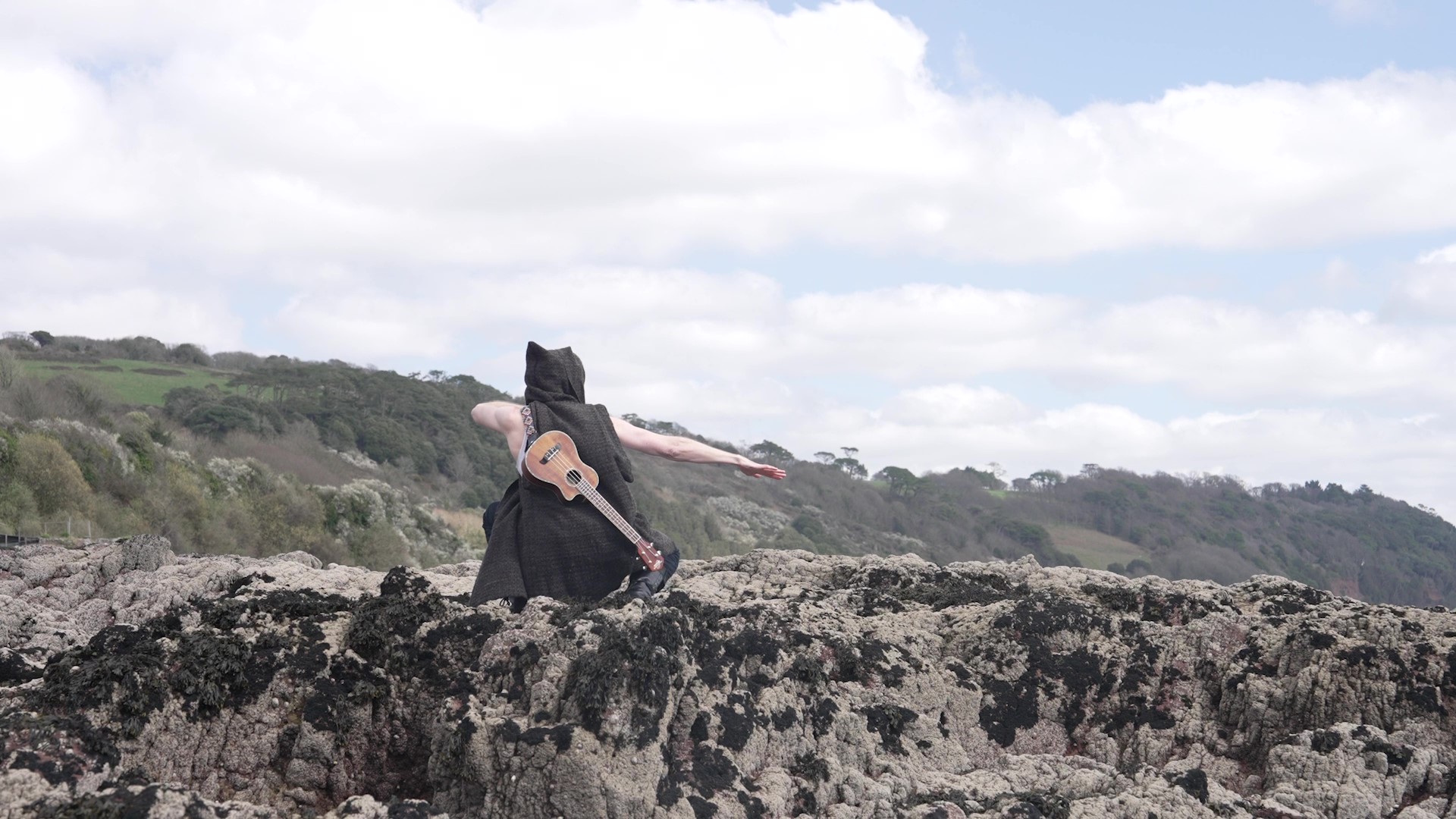
In my earlier writing on Mesotopia: Towards a Place of Lyrical Inquiry, I proposed that meaning doesn’t live in the mind or the world alone, but somewhere between — in the mesotopic zone where bodies, environments, and language meet. The mesotopia is not a fixed place but a field of relation: a shifting terrain in which the real and the unreal, the felt and the thought, co-emerge through the act of encounter. This is not the materialist view that there is a “real world” out there waiting to be known, nor is it a purely idealist stance that the world is just a projection of the mind. The mesotopian perspective holds that the world is real, but it can never be fully known — only felt, intuited, translated and partially expressed through our sensory and linguistic entanglements with it.
This brings me to what I call the Psy-omatics of Encounter. By this I mean the subtle interplay between psyche and soma — mind and body — in the process of making meaning from environmental experience. Every encounter, whether with a tree, a breeze, or a city street, is not simply registered by the senses but interpreted by the nervous system, the emotions, and the imagination. These layers overlap and modulate one another in complex ways. The body registers vibrations and textures; the psyche weaves these into narratives, memories, and associations. Meaning, in this sense, is a psycho-somatic improvisation — an event that unfolds in the middle space between our physiological being and the environment’s affective impositions.
This is where I locate the process of lyrical production. My process of lyrical poesis emerges from these embodied encounters. Rather than treating poetry as a form of representation, I use it as a method of inquiry — a way to stay with the textures of experience before they are translated into fixed categories. Through this practice, I explore how different languages orient us differently toward the environment. Some languages, for example, frame the nonhuman world as animated and relational; others cast it as a passive backdrop for human action. By writing through and with these differences, I seek to expose the underlying psychic and bodily rhythms that shape our sense of environmental being.
It is crucial to emphasise that these encounters are localised events. They happen in the specificity of place — this humidity, this soundscape, this particular alignment of body and weather. Yet our minds often intervene, filtering these sensations through anthropocentric schemas. We name, measure, and categorise what we meet. This filtering process makes the world intelligible, but it also diminishes its strangeness. It reduces the real weirdness of environmental being — the sense that the world exceeds our concepts, that it vibrates with meanings we cannot fully articulate.
For this reason, I argue that intuition remains fundamental to any inquiry into the environment. Intuition is not anti-intellectual; it is the body’s capacity to sense patterns before they crystallise into thought. It is how we orient ourselves toward the more-than-human field of existence. Much of what we call environmental knowledge, from early cosmologies to modern ecological insight, has emerged from this intuitive mode of knowing. The Psy-omatics of Encounter, then, is not just a theory — it is an invitation to feel-think our way into the world again, to rediscover the lyrical intelligence that has always connected psyche, soma, and earth.
As always, my a’th kar!
Here is a link to my thesis which features a more detailed description of my work:
https://pearl.plymouth.ac.uk/ada-theses/113/