

Growing up in Cornwall in the 1970s, I witnessed the end of its era as an industrial region. As I recall, the tin mining industry had shrunk to only a few working mines; however, ECLP (as it was known then) still produced large amounts of high-quality kaolin and employed many local people. More importantly, numerous local factories and works ensured that towns such as St Austell, near my home, remained hubs of thriving economic activity. It still surprises me how rapidly these communities dissolved following the removal of major industry. By the mid-1980s, towns like St Austell were defined by mass unemployment and all the attendant social problems: broken homes, petty crime, and substance abuse.
What exactly is the legacy of centuries of industrial activity?
I began this essay with a brief story of growing up near St Austell to illustrate several points. Firstly, it’s important to highlight the lack of investment in communities of workers who generated vast amounts of wealth for a small number of industrialists and financiers. Secondly, I want to stress that this story is not only about Cornwall—it is a story shared by every community in the UK that has faced deindustrialisation. In my case, I managed to find work in various service industries and first left Cornwall as a young teenager. I’m not exaggerating when I say that for many young men leaving school in the mid-eighties, the only options were the army or, via drug dealing, prison.
But where did all the money go?
Keep this simple question in mind. I believe that any political movement focusing on redressing the excesses of financial extortion in the UK will resonate with the vast majority of people. During the ‘financial crash’ of 2008, I was working as a freelance researcher, though I remained close to many of my former colleagues at the BBC. We wanted to report on how the crash wasn’t caused by ‘mismanagement’ but was, in fact, a deliberate strategy to extort vast amounts of money from the public purse. Rona Fairhead, then chair of the BBC Trust, was also a non-executive director of HSBC (5). She made it clear that such reporting would not be in the public interest. It’s worth noting that this was the largest theft of public money in history, and people like Rona continued to be paid handsomely while many families in the UK still cannot afford anywhere to live.
This is how power functions in London: it is hidden, opaque, and it rewards the worst people. To mount any meaningful challenge to political power, it is vital to acknowledge how the financial services sector underpins every political, social, and academic institution. I suggest that Westminster does not govern the financial institutions known as ‘the City’—rather, these institutions govern Westminster. Therefore, I struggle to understand how asking Westminster to ‘recognise’ a Cornish nation would be economically empowering for Cornish people.
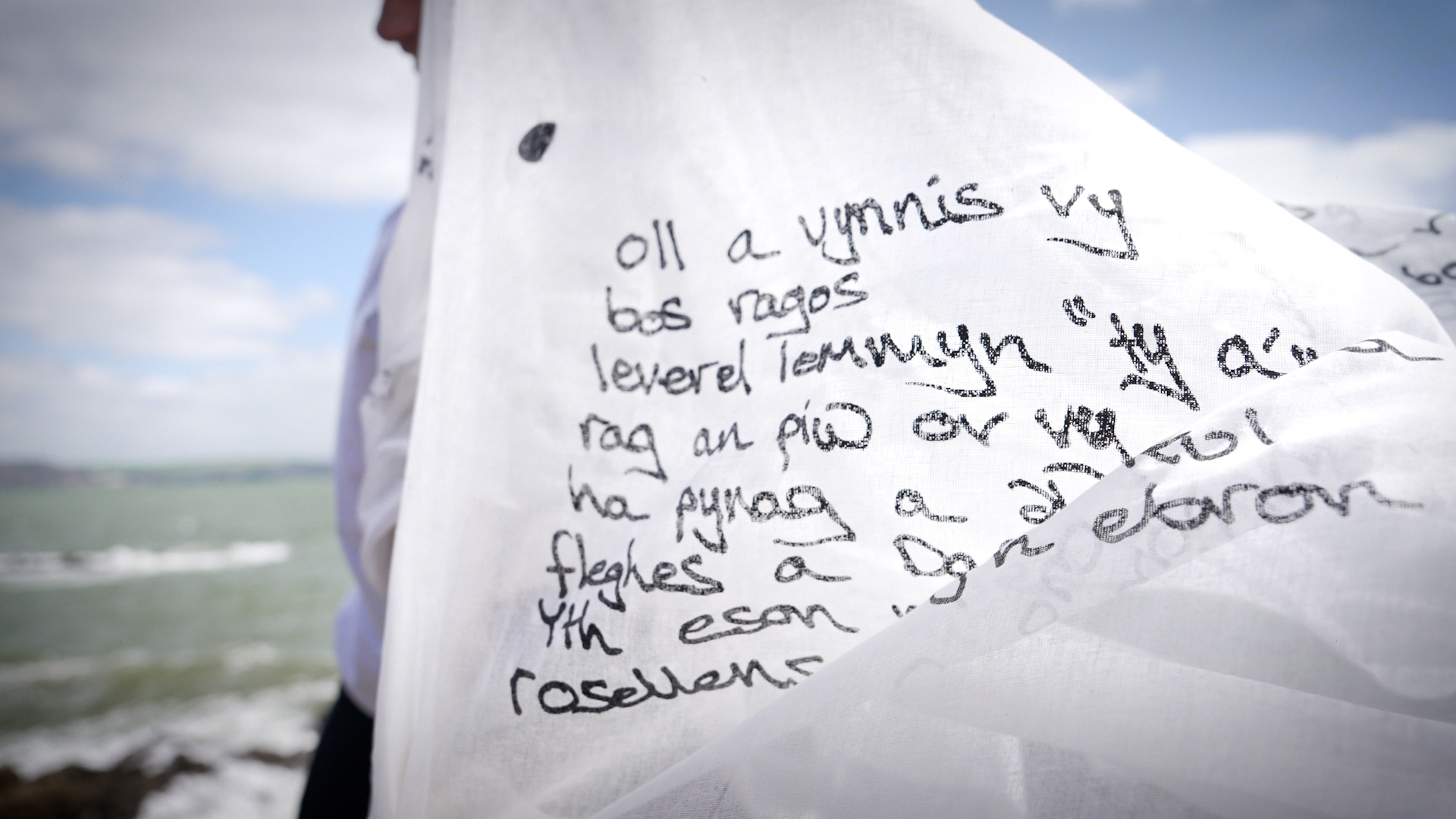
I understand the arguments for recognising a specific Cornish identity based on a historical tradition distinct from other regions of the UK. I am proud of my Cornish heritage and proud to be a speaker of Kernewek. I continue to support friends in Cornwall who see Cornish nationalism as a vehicle for political change. Yma kerensa y’n geryow ma. However, I’m not convinced that generating a new political reality from vaguely defined qualities will benefit what remains of the Cornish people currently living in Cornwall.
Please consider these three statements while reading this essay:
- Proclaiming national political sovereignty while maintaining dependence on fundamentally untrustworthy financial systems cannot solve the problems of economic disenfranchisement.
- In the UK, real political power lies in financial institutions.
- Foreign policy is domestic policy.
Rather than focusing on the fact that profits from centuries of industrial production have been funnelled offshore to fund a few lavish lifestyles, vast amounts of time, energy, and money have been spent ensuring that political discourse avoids the simple question: where did all the money go?
Last November, I attended an evening at the Penryn university campus which explored ways in which agan yeth (our language) could be used in political activism. There was a charming young chap who advocated ‘borrowing’ (or appropriating) elements of Māori whakapapa—the links between Māori and land—and applying them to Kernewek activism. Many Māori people I know would not be happy with this misappropriation; some Māori activists might think it acceptable. Regardless, I spoke with the presenter, and he said it was important to highlight a Kernewek connection to the land, which he called Awen. I thought it sounded quite ‘Thulian’ (the Thule Society being an esoteric occult group affiliated with the German Völkisch movement that gave rise to Nazi ideology), and he laughingly agreed that it sounded “a bit fash!”
To be clear—I’m not claiming this man was consciously promoting Nazi ideology—but I want to illustrate how complicated discourse around national ‘identity’ becomes when the focus shifts from the impacts of economic exploitation to ideas of an organic community united by shared culture, language, and hardship.
For Cornish nationalism to serve my people as a vehicle for political change, one must accept that my family from the Trelander estate in Truro shares a political goal with, say, the Boscawen family. We’re both Cornish families—right? Therefore, according to the logic of our friend at Penryn College, we all share a spiritual connection to Cornish land and unique qualities of Cornishness distinguishing us from everyone else in the UK. That doesn’t sound like participatory politics to me; it sounds like Lord of the Rings-style feudalism.
My politics are not informed by my Kernewek identity. They are diametrically opposed to everything the Boscawen family represents—regardless of whether we identify as Kernewek, English, or British. My family, like many others, has had to navigate the economic turmoil of deindustrialisation and its resulting social issues. The Boscawens, by contrast, have profited from exploiting cheap labour in mining operations and, no doubt, from savvy financial investments in imperial markets. Politically, my family has more in common with working-class families in the post-industrial north of England than with the Boscawens.
I am somewhat confused by the need to “be recognised as the UK’s fifth nation” (1), particularly in light of Councillor Cole’s statement that:
“Standing up for Cornwall is what this bill is all about… The leader of the council has made it clear that he is committed to securing meaningful devolution, whilst also protecting the integrity of our Celtic nation as a political unit. I believe he is right in doing this.”
“We have a thousand years of history and a myriad of reasons—cultural, economic, environmental, linguistic, social—as to why we need to stand together and maintain our unity in pushing for that meaningful and bespoke settlement for Cornwall.” (1)
This suggests to me that obtaining political recognition as a Celtic nation is ultimately about “securing meaningful devolution” (1). Presumably, a more autonomous Cornwall would function similarly to Wales—but on a much smaller scale. So let’s look at the Wales Economic and Fiscal Report 2024 (2) to assess how Welsh devolution between 1998 and 2011 affected the Welsh economy. I’m still working through the report, but a statement in the Executive Summary illustrates my point:
“Wales’ economy is deeply embedded within the wider UK economy. Many of the general trends which affect the UK are likely to be reflected or heavily influence Welsh economic conditions.” (2:3)
There are many such statements. The more I read, the more challenging questions arise. I have no doubt that many Welsh people prefer a more autonomous Wales; however, if the economy remains tied to the City of London, what are the material benefits for working people? The cachet of distancing oneself from ‘Englishness’ might be appealing, but Welsh people are effectively tethered to the same exploitative financial institutions as everyone else. Why have people in Wales permitted some of the worst elements of English society to manage the economy of their devolved Celtic nation? Who benefits from this arrangement?
Returning to my earlier provocation—‘foreign policy is domestic policy’—I don’t think most people in the UK realise how much of the economy depends upon ongoing exploitation of cheap labour overseas. People who work in the City will happily trade with the worst and wealthiest people on the planet: theocrats, dictators, human traffickers, drug cartels, and arms dealers. From what I can gather, most companies trade the products of cheap, exploited, or slave labour from around the world to launder profits obtained from dealing in drugs, weapons, and oil.
Obviously, this is a simplification, but once you cut through the PR, that’s basically what is happening. People far more informed than me have written about this for decades. To what extent can Westminster exert any real power over international racketeering on this scale (7)? Far from being the heart of UK politics, Westminster is a distraction from the real business of the financial markets. Scotland and Ireland appear to have taken steps to challenge London’s economic grip, which is interesting—for example, Scotland’s ongoing fight over North Sea oil profits (3) and Ireland’s popular policy of boycotting Israeli settlements (4). These are real political battles.
Any discussion of national or personal identity is inflammatory—which is why many corporate and media institutions committed to maintaining the economic status quo are so happy to perpetuate them. ‘Divide and conquer’ is not just a catchy Roman phrase; it’s a strategy that powerful regimes have used to control people since Philip II of Macedon. I can’t help but think that the radical politics of Wales, which once had a huge impact on UK political discourse, has effectively been neutered—channelled into a semi-nationalist movement still subordinate to the City of London.
These lingering, quasi-imperial financial institutions are repulsive, and I empathise with the desire to vote ourselves off the island. However, we must be clear-eyed about who benefits from further devolving the UK into semi-autonomous regions still anchored to the current financial system. Personally, I think it’s better to raise economic consciousness as a tool for cultivating popular movements that push for real material change across the UK—though I could be wrong.
The more I come to understand how the UK functions as a social and political entity, the more I feel I’ve been defined by my economic status rather than my Kernewek heritage—and I am keen to learn how a semi-autonomous Kernow would change that.
As always—my a’th kar!
References:
1 – Cornwall Council Website (2025) Cornwall Council Passes Motion Calling for Cornwall to Be Recognised as Fifth Nation. Accessed 2025. https://www.cornwall.gov.uk/council-news/council-budgets-and-economy/cornwall-council-passes-motion-calling-for-cornwall-to-be-recognised-as-the-uk-s-fifth-nation/
2 – Welsh Government (2024) Wales Economic and Fiscal Report 2024. Accessed 2025. https://www.gov.wales/wales-economic-and-fiscal-report-2024
3 – BBC News (2024) What Will The Election Mean for North Sea Oil?. Accessed 2025. https://www.bbc.co.uk/news/articles/crgl32zjpwdo
4 – O’Carroll, L. (2025) Irish Government to Unveil Bill Banning Imports from Occupied Palestinian Territories. The Guardian. Accessed 2025: https://www.theguardian.com/world/2025/may/26/ireland-bill-ban-imports-from-occupied-palestinian-territories
5- Plunket, J (2015) Rona Fairhead: My Main Focus is the BBC, Not HBC. The Guardian. Accessed 2025: https://www.theguardian.com/media/2015/mar/04/rona-fairhead-main-focus-bbc-not-hsbc
6 – Verran (2025) The Mesotopia: Towards a Place of Lyrical Inquiry. Student Thesis PhD. University of Plymouth. Accesed 2025: https://researchportal.plymouth.ac.uk/en/studentTheses/mesotopia-towards-a-place-of-lyrical-inquiry
7 – Wintour, P (2024) Nearly 40% of Dirty Money is Laundered in London and UK Crown dependencies. The Guardian. Accessed 2025: https://www.theguardian.com/world/article/2024/may/14/nearly-40-of-dirty-money-is-laundered-in-london-and-uk-crown-dependenies