
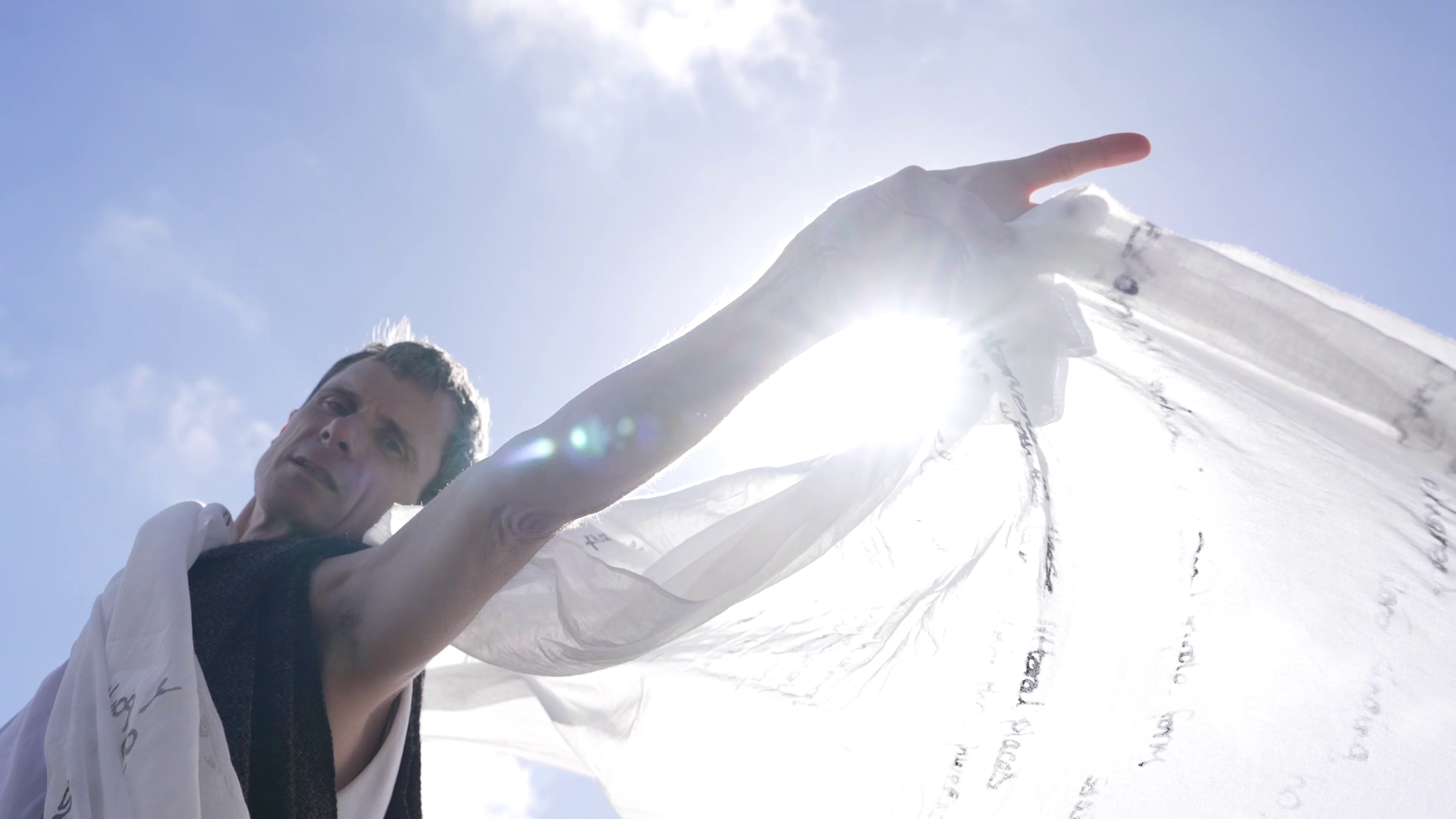
When people ask me what psy-omatics actually means, I often say: it’s about how thinking and sensing happen together, in the body, in a place, at a moment. It’s not just about ideas in the head, but the messy, alive relationship between the enviroment, mind, body and language (1). In a post titled Introducing The Psy-omatics of Encounter, I outline how I make sense of the physical and conceptual things that I meet. Here, I want to outline how I articulate these encounters or turn them into communicative events: what I call The Psy-omatics of Presentation.

Any kind of meaningful presentation – whether it’s writing, speaking, poetry, performance, or teaching – requires preparation. Not just mental preparation, but physical preparation too. Over the years, I’ve learned that if I want to present lyrical ideas clearly, my body has to be ready to carry them. That means fitness, breath, posture, voice and attention. I don’t just think the words; I feel them moving through me; I project them, shape them.
This approach borrows from many places. From poetry, I take Charles Olson’s idea that language carries energy from the writer to the reader or, in my case, from the presenter to the listener (2). I have interpreted that energy somatically. It’s not an abstract force floating around; it’s something felt in muscle tension, rhythm, breath, and timing. From performance theory, I’ve been influenced by Eugenio Barba’s idea of the “dilated body,” where trained physical awareness creates a bridge between action and thought (3). What interests me here is intuition – not as something vague, but as a form of embodied thinking.
Where I start to depart from some of these traditions is in how I understand the environment. I don’t experience the world as pure flow, constant movement or total immersion. Instead, I encounter both flows and substances. Some things move and change; others resist, hold still and demand attention. When I’m presenting, I’m negotiating both. Sometimes I need motion and momentum. Sometimes I need stillness, pauses, and silence to let meaning settle.
This is where psy-omatics differs from approaches like Sandra Reeve’s “eco-somatics,” (4) which often emphasise continuous movement and full integration with the environment. My relationship to a site – whether that’s a landscape, a room, or a digital space – is never complete or seamless. There is always a part of ‘me’, psychologically and somatically, that does not dissolve into the environment. Language itself creates distance. To name something is already to step back from it. That distance isn’t a failure; it’s necessary for thought.
For many reasons, I’ve become wary of using the word performance. It often carries theatrical expectations that can obscure what I’m really trying to do. I’m not interested in spectacle, although I understand the mechanics of smoke and mirrors. I’m interested in clarity, sincerity and inquiry. The psy-omatics of presentation is about finding ways to present lyrical thinking – through speaking, making and doing – that respect the tensions between body and mind, movement and stillness, nearness and distance.
In the end, psy-omatics is not a method you copy. It’s a way of paying attention. Each project, each presentation, has to find its own form. Or, as I put it in the thesis, it has to be done in a way better described not as performance, but as gwruthyl: a making-through-doing, grounded in the lived encounter between self, world and language.
As always, my a’th kar!
References:
(1) Verran, T. (2025) Mesotopia: Towards a Place of Lyrical Inquiry. Thesis. University of Plymouth. Available
at: https://doi.org/10.24382/nv45-pk79
(2) Olson, Charles, (1950) “Projective Verse,” Originally published in, Poetry New York, no 3, 1950,
www.poetryfoundation.org/articles/69406/projective-verse. Accessed 20 November 2023.
(3) Barba, Eugenio. (1985) The Dilated Body: on the Energies of Acting. New Theatre Quarterly, 1(4), pp. 369–
382.doi:10.1017/S0266464X00001792.
(4) Reeve, Sandra. (2006) The next Step: Eco-Somatics and Performance. Move into Life. https://www.moveintolife.com/uploads/1/3/9/6/13969833/the_changing_body2.pdf [Accessed 2025]